

3D Printing for Architecture: Scale Models, Facade Prototypes, and Decorative Elements

Protype CD400 (IDEX)PLAABSPET-GPA-CF
3D Printing for Architecture: Scale Models, Facade Prototypes, and Decorative Elements

Why Architecture Firms Are Turning to 3D Printing

Architectural practice relies on communication -- with clients, construction teams, and planning authorities. Physical models remain one of the most effective instruments in that communication. They allow stakeholders to assess proportions, facade articulation, and the interplay of volumes in ways that a screen can only approximate.

The challenge lies in the traditional model-making process. Handcrafted models from a workshop typically take several days to weeks. Costs tend to be high, and when a design changes, the model often needs to be rebuilt from scratch. For competition entries -- where deadlines are tight and multiple concept iterations may be required -- this workflow frequently becomes a bottleneck.

Industrial 3D printing (FFF/FDM) can help shorten that path. A digital model from CAD software is sent directly to the printer -- without intermediate steps. A scale model, facade fragment, or decorative element is printed autonomously, including overnight. If the design changes, the file is updated and reprinted. This enables consideration of a fundamentally different work rhythm: multiple physical iterations per week instead of one per month.


Typical Applications Addressed by 3D Printing

  • Scale building models. Architectural models at 1:100-1:500 scales for client presentations, design competitions, and urban planning reviews. Complex geometry that is difficult to reproduce by hand is printed directly from CAD data.
  • Facade element prototypes. Facade panel fragments, louvers, decorative grilles at 1:1 or near-1:1 scale -- for evaluating surface articulation, light-and-shadow behavior, and tactile qualities.
  • Urban planning models. Multi-building compositions for master plans: city blocks, streetscapes, landscaping, terrain. Dual-material printing (IDEX) allows buildings and landscape to be differentiated by color or texture.
  • Decorative interior elements. Panels, light fixtures, ceiling structure components -- from prototype through low-volume production.
  • Structural node prototypes. Connection joints, fastening elements, non-standard junctions -- verifying geometry and fit before ordering metal fabrication.
  • Custom mounting and installation aids. Installation fixtures, laying templates, formwork elements for complex shapes.

When 3D printing is particularly valuable in architecture

  • A competition entry with tight deadlines and multiple concept iterations
  • The client wants to evaluate a 1:1 facade fragment before design approval
  • A parametric or organic form that is difficult to fabricate with traditional methods
  • A model is needed for a planning committee or design review on short notice

Application Scenarios

01

Competition model with complex geometry

An architecture firm is entering a design competition. The concept features complex facade articulation with parametric elements. A model workshop estimates a 10-business-day lead time. With a 3D printer: the model is sectioned in the slicer, printed over 2-3 days (including overnight printing), then assembled and painted in a day. If the concept changes after the first round -- individual sections are revised and reprinted, rather than rebuilding the entire model.

02

1:1 facade fragment for client approval

A project involves non-standard facade panels. The client wants to see and touch a fragment before sign-off. The CD400 build volume (400x400x400 mm) enables printing of a full-size panel fragment or louver section. Material options include ABS or PET-G, with finishing and painting as needed. The client evaluates surface articulation, shadow patterns, and pattern scale. If revisions are needed, an updated version can be ready within 24 hours.

03

Urban planning master plan model

A development company is preparing a district master plan. The model requires several dozen buildings, streets, and landscaping. Buildings are printed in PLA in one color, landscape elements in another (dual-material IDEX printing). Copy mode enables two identical buildings to be printed simultaneously, helping to accelerate output. The model is assembled on a shared base, and individual buildings can be swapped out as the concept evolves.

04

Decorative interior elements

An interior designer is developing a series of decorative panels for a building lobby. The geometry is parametric, and hand-fabricating each panel would be costly. A prototype is printed in PLA for form approval, followed by a short production run in ABS or PET-G for installation. Each panel can be unique -- per-unit cost in 3D printing does not depend on the number of design variants.

Want to evaluate whether 3D printing is a fit for your architectural project?

Request a consultation

Practical Benefits of Implementation

Shorter model-making cycles. The path from digital model to physical object can typically be reduced from weeks to days. This is especially noticeable in competition work, where each concept iteration requires a new model. Three to four physical variants in two weeks represents a fundamentally different pace of design development.

Freedom of form. 3D printing removes many constraints of traditional model making. Parametric surfaces, organic forms, lattice structures, and complex curvatures are all printed directly from CAD data without additional effort. This enables consideration of formal solutions that were previously too labor-intensive for physical realization.

Scaling from prototype to production. The same printer can produce a single decorative element prototype and then a short run of 20-50 units -- without tooling investment. Per-unit cost is largely independent of batch size.

Dual-material printing. The IDEX system on the CD400 allows printing in two materials or colors in a single pass. For architectural models, this means differentiating structural elements from glazing, buildings from landscape, or existing buildings from proposed development -- without manual gluing or painting.

Scale building modelsFacade panel fragmentsUrban planning modelsDecorative panelsInterior modelsStructural node prototypesLight fixture elementsInstallation templatesParametric elementsTopographic terrain models

3D Printing and Artificial Intelligence: Applications in Architecture

The combination of additive manufacturing and AI tools opens a range of practical possibilities for architecture firms. Some approaches are already in use; others are at the stage of active adoption.

Generative design of structural nodes. AI-driven algorithms can propose structural connection geometries optimized for stiffness and weight under given load conditions. The result is often organic geometry that is difficult to achieve through milling but can be printed on an FFF system. PA-CF provides sufficient strength for evaluation prototypes of such nodes.

Parametric architecture. Parametric tools (Grasshopper, Dynamo) combined with neural network optimizers can generate thousands of facade element variations, while 3D printing allows rapid physical realization of the best options. This can help accelerate selection: instead of on-screen evaluation, teams compare real-world samples.

Topology optimization of structural elements. AI tools can calculate minimum necessary material distribution in load-bearing elements. In architecture, this is particularly relevant for pavilions, exhibition structures, and temporary installations, where weight reduction without sacrificing strength is a practical objective.

Automated model preparation for printing. Architectural BIM models typically require adaptation for 3D printing: sectioning, adding connection features, generating supports. AI-based tools can help automate this preparation, reducing the time from BIM model to finished physical model.

Insolation and wind flow analysis. Neural network models trained on CFD simulation results enable rapid assessment of massing options from insolation and aerodynamic perspectives. The best variants can then be immediately reproduced as physical models for client presentations -- arguments supported not only by calculations but by tangible objects.


Why Protype CD400

Large build volume. 400x400x400 mm enables printing of large model sections, full-size facade element fragments, and large-scale urban planning models without excessive sectioning. For architectural applications, build volume is often the determining factor in equipment selection.

Dual-material printing (IDEX). Two independent extruders allow combining different materials or colors in a single print job. For architectural models, this means separating elements by function: structure and glazing, existing and proposed development, buildings and landscape. Copy and Mirror modes double output when printing identical elements -- for example, typical buildings for an urban planning model.

Precision and surface quality. XY positioning accuracy of 5 microns, Z of 2 microns. Minimum layer thickness of 0.05 mm. For architectural models where visual quality is critical, this delivers clean surfaces and fine detail resolution. Nozzle range of 0.3-1.2 mm allows choosing the balance between detail and speed.

Autonomous operation. Automatic filament feed (4x 3 kg spools) supports unattended operation for over 10 days. Large models often print for dozens of hours -- the auto-feed and automatic bed leveling allow printing to be started at the end of the workday with results ready by morning. An integrated monitoring camera enables remote process oversight.

Wide material selection. Open material architecture -- no vendor lock-in. PLA for visual models, ABS and PET-G for functional prototypes and interior elements, PA-CF for structural nodes requiring higher strength. Integrated drying chambers (2x up to 80 degrees C) maintain moisture-sensitive materials in optimal condition.


CD400 vs. CD400HT Comparison

ParameterCD400CD400HT
Build volume400x400x400 mm350x350x400 mm
Chamber temperatureUp to 90 °CUp to 150 °C (ΔT < 1 °C)
Bed temperatureUp to 150 °CUp to 250 °C
Hotend temperatureUp to 550 °CUp to 550 °C
Drying chambers2x up to 80 °C2x up to 130 °C
Key materialsPLA, ABS, PET-G, PA-CFPEEK, PEKK, ULTEM + all CD400 materials
Recommended forModels, prototypes, decorative elementsStructural elements with high-temperature requirements
Warranty12 months12 months

Try & Buy: 3-month evaluation program

Protype offers a Try & Buy program: use the printer in your own studio for 3 months, and if you purchase, 100% of the rental cost is credited toward the purchase price. Minimal risk -- maximum opportunity to evaluate real-world impact.


Frequently Asked Questions


Ready to evaluate how 3D printing fits into your architectural practice?

Try & Buy program: 3 months of on-site evaluation with 100% of rental costs credited toward purchase.

02

Application areas

We integrate Protype into production cycles across industries—from Education to Aerospace

Where Protype printers already work

01

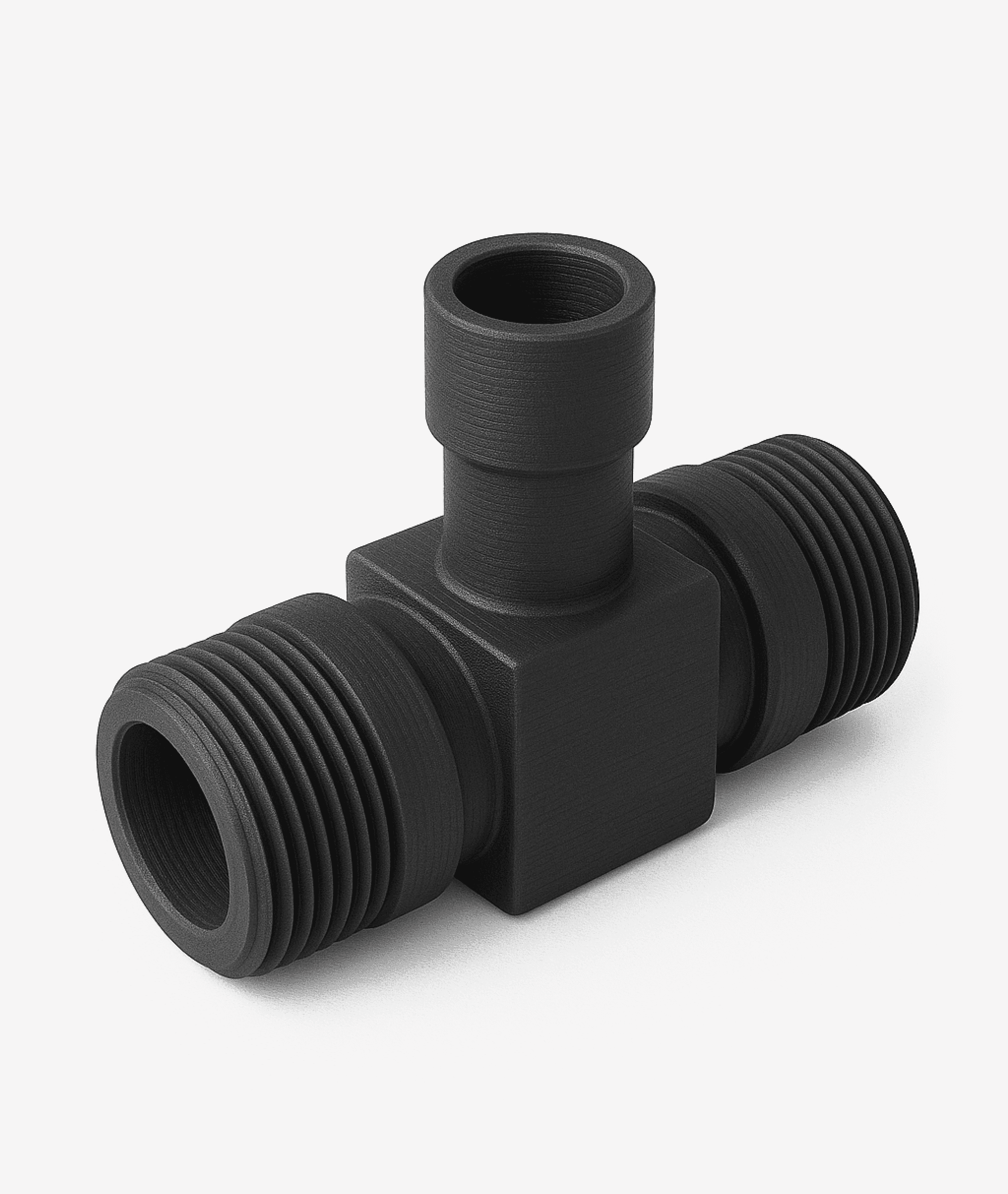
Mechanical engineering
Mechanical engineering

Applications

Jigs, gearboxes, brackets.

Why it's worth it

Tooling in hours, not weeks. Small-batch costs drop 5–10x while accuracy stays the same.

02

Railway

Railway

Applications

Fasteners, sensor housings, cable channels.

Why it's worth it

The railcar doesn't sit idle while the part ships from a warehouse. Print on-site — minimal downtime.

03

Medical

Medical

Applications

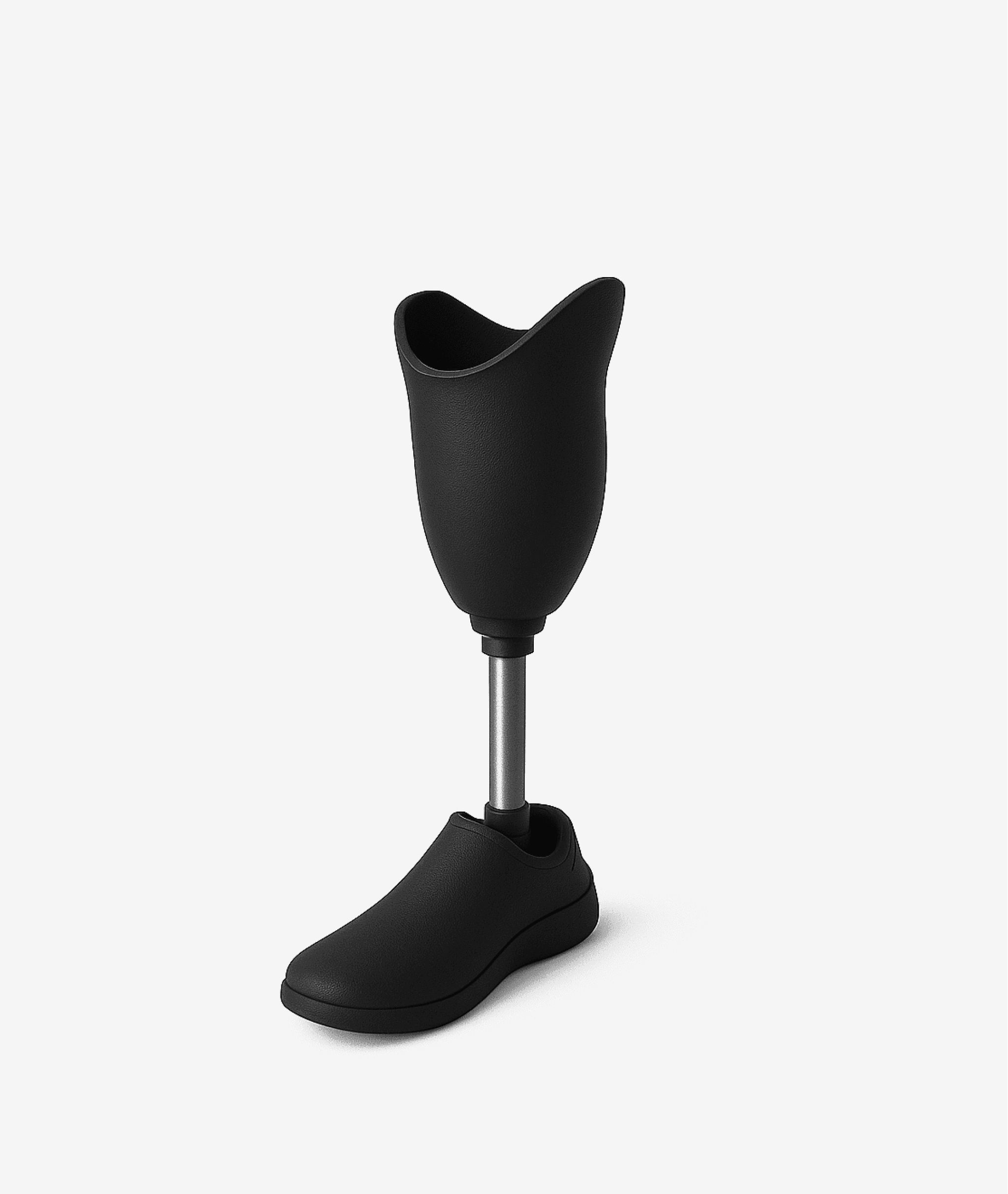
Orthoses, prosthetics, anatomical models.

Why it's worth it

Every piece fits the patient's anatomy exactly. No molds needed, ready in a day.

04

Education & R&D

Education & R&D

Applications

Fixtures, gears, trays.

Why it's worth it

A failed prototype isn't a setback — it's the next iteration. A new one prints in an hour.

05

Aerospace

Aerospace

Applications

Covers, ducts, fasteners.

Why it's worth it

Lighter part, more complex geometry — and still ready overnight instead of a month on the mill.

06

Petrochemicals

Petrochemicals

Applications

Mechanisms, housings, training models.

Why it's worth it

Test the material and shape in days rather than waiting months for production tooling.

07

Shipbuilding

Shipbuilding

Applications

Supports, gaskets, small hardware.

Why it's worth it

The yard doesn't wait on a supplier — parts print right in the dock, repairs stay on schedule.

08

Instrumentation

Instrumentation

Applications

Enclosures, covers, PCB holders.

Why it's worth it

Changed the PCB layout? Reprint the enclosure. No retooling, no missed deadlines.

Don't see your industry?

Tell us what your facility produces — we'll find a solution to cut costs and speed up part production

We'll calculate the savingsfrom 3D printingfor your production

We'll evaluate your parts, compare with your current method, and show where 3D printing is more cost-effective.

  • Cost comparison: current method vs 3D printing
  • Which parts and tooling are worth switching
  • Material and equipment recommendations

Or reach out directly

WhatsApp / Telegram is the fastest.

How did you hear about us?

By clicking "Get an estimate", you agree to the Privacy Policy and Terms of Use.

Response within 24 h on business days. Quote — up to 48 h.