




3D Printing for Education and R&D: Research Prototypes, Teaching Models, and Laboratory Equipment
Protype CD400 / CD400HT + FILOPLAABSPET-GPA-CFTPU
Why Education and R&D Require Industrial 3D Printing
Universities, research institutes, and laboratories operate in environments where every project is unique. A scientific experiment demands custom test fixtures, a teaching course requires hands-on demonstration models, a thesis project needs a functional prototype. The common thread across these tasks: low volumes, high variability, and a continuous need for new iterations.
Desktop-grade 3D printers, commonly found in academic settings, are constrained by limited build volume, restricted material options, and inconsistent output quality. They can handle simple demonstrations, but they typically fall short for serious research work -- materials science, functional prototyping, or custom laboratory equipment fabrication.
Industrial FFF printing enables consideration of a fundamentally different level of capability. A large build volume, active heated chamber, broad range of engineering materials, and dual independent extrusion can help researchers and educators work with the same technologies applied in actual production environments.
For research institutions, an additional factor is equipment autonomy and reliability. A printer capable of operating unattended for multiple days significantly expands a laboratory's capacity, particularly where dedicated technical staff is limited.
Typical Applications in Education and R&D
Research prototypes. Functional samples for verifying design concepts, testing, and experimentation. Rapid iteration: from digital model to physical part in hours.
Teaching and demonstration models. Visual aids for lectures and lab sessions: cross-section models of mechanisms, architectural scale models, anatomical structures, scale models of engineering systems.
Student projects. Coursework and thesis projects requiring physical prototype fabrication. Students experience the full cycle: design, print preparation, manufacturing, and testing.
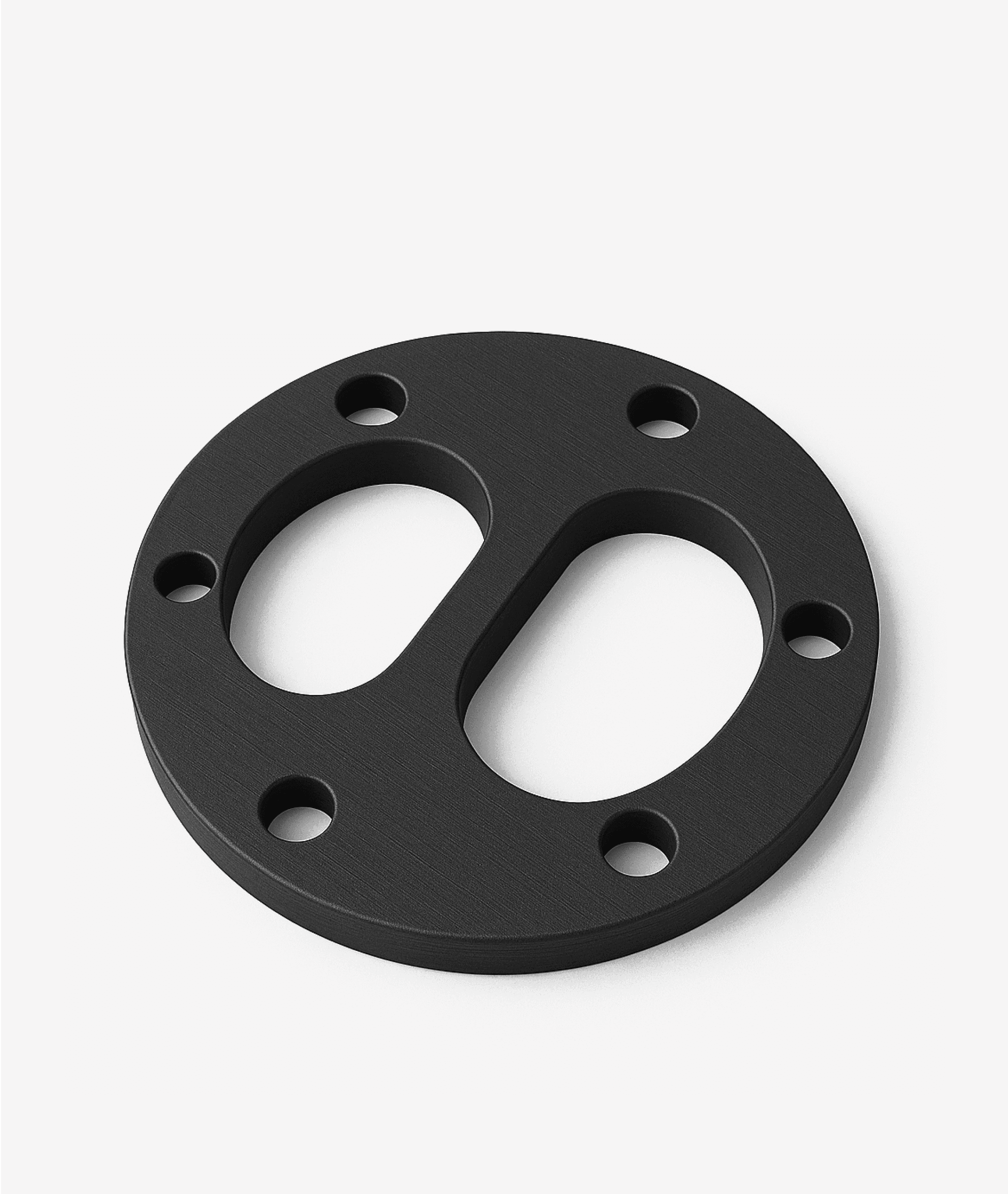
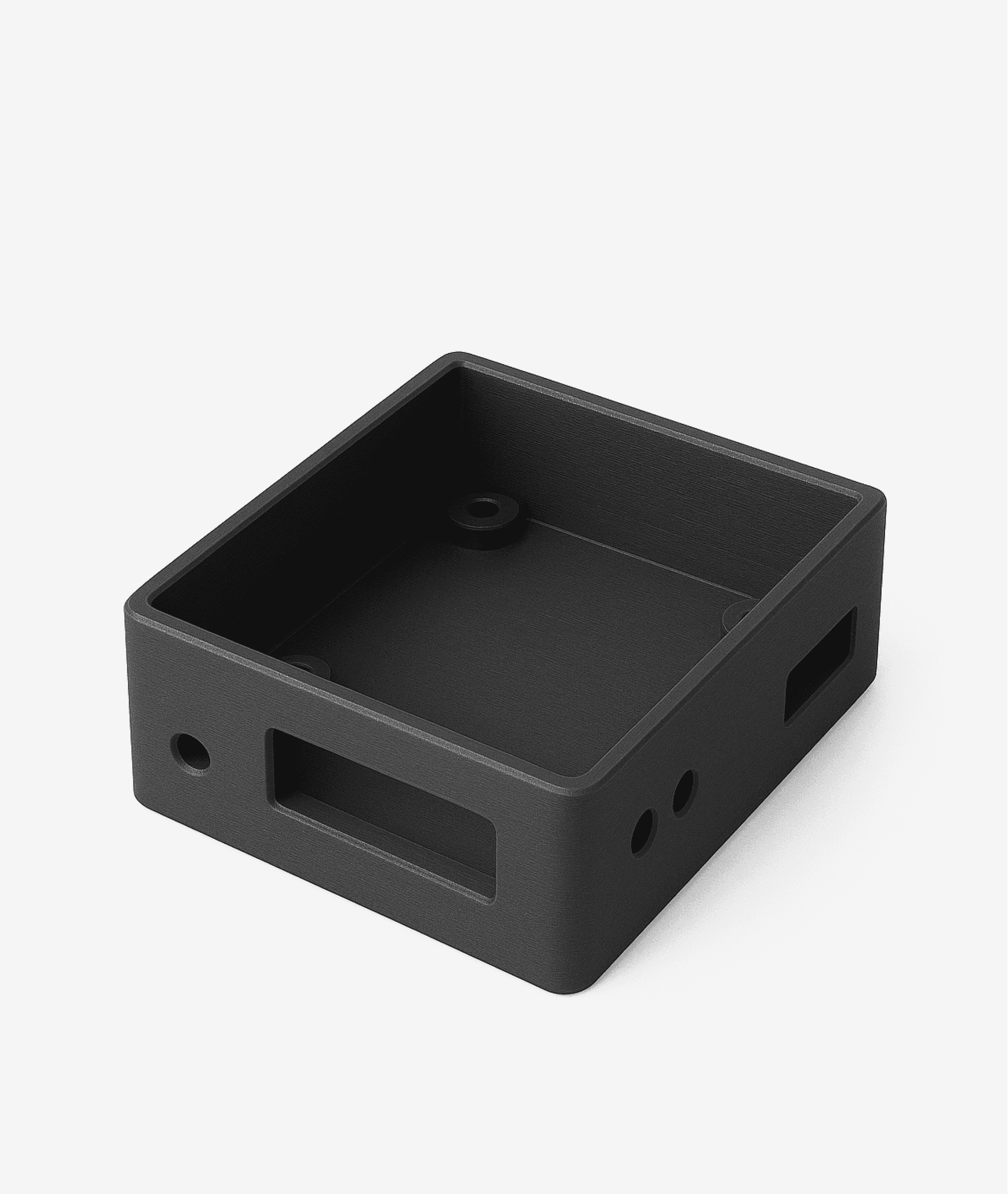
Laboratory fixtures. Sensor holders, sample guides, electronics enclosures, instrument mounts -- parts that cannot be purchased off the shelf.
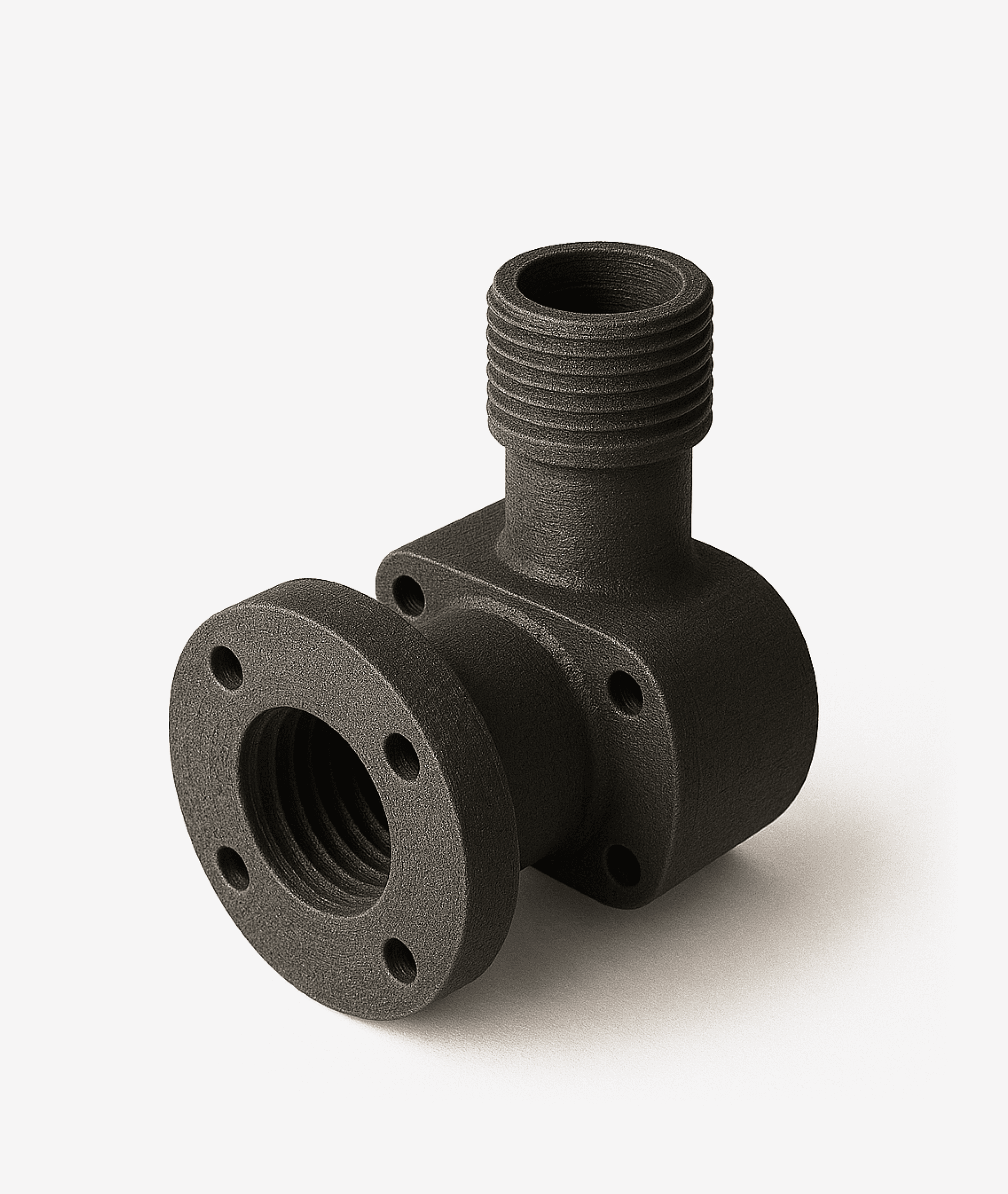
Experimental apparatus. Non-standard test bench components, fluid and gas channels, chamber housings, custom mounts for unique experiments.
Materials science test specimens. Printing standard and non-standard specimens for tensile, flexural, and thermal testing. Varying print parameters to study their effect on material properties.
Functional test samples. Parts for evaluating mechanical, thermal, and chemical characteristics under various loading conditions.
When a university or laboratory should consider an industrial 3D printer
Desktop printers do not provide the stability and repeatability required for research tasks
Printing with engineering polymers (PA-CF, TPU, ABS) under controlled conditions is needed
Desktop machine build volumes are insufficient for full-scale prototypes
The laboratory serves multiple departments or research groups simultaneously
Application Scenarios
01
Materials science research
A laboratory studies the influence of print parameters on the mechanical properties of polymer specimens. On the CD400, series of test specimens are printed from PLA, ABS, and PA-CF with varying chamber temperature (up to 90 degrees C), layer thickness (0.05-0.75 mm), print speed, and infill orientation. The open material architecture allows working with filaments from any supplier -- critical for research objectivity. Integrated drying chambers (2x up to 80 degrees C) prepare hygroscopic materials directly before printing.
02
Engineering education: from CAD to physical part
In a design engineering course, students model mechanical assemblies in CAD and proceed to physical prototyping. A printer with a 400x400x400 mm build volume enables printing full-scale models, not just scaled-down replicas. IDEX Copy mode allows two identical projects to print simultaneously -- useful when multiple student teams are working in parallel. A nozzle range from 0.3 to 1.2 mm lets instructors choose between part detail and fabrication speed depending on the assignment.
03
Research laboratory: custom fixtures
An experimental test bench requires a set of unique components: a sensor mount at a non-standard angle, a flow visualization chamber housing, an adapter between elements from different systems. Each part exists as a single unit. On the CD400, housings and mounts are printed from PET-G or ABS, while components subject to higher loads are printed from PA-CF. Dual extrusion (IDEX) enables printing parts with soluble supports for complex internal geometry.
04
Multi-university consortium: fleet management
Several universities in a region pool their additive manufacturing resources. Each campus has a CD400 installed, and all printers are connected to ProtypeHub via Secure VPN. The fleet administrator can see each machine's utilization, distribute print jobs, monitor material consumption, and track print status remotely. A researcher can submit a job to the nearest available printer. LAN/Wi-Fi connectivity and a 22-inch touchscreen provide convenient local operation at each campus.
Want to evaluate how industrial 3D printing fits your laboratory or teaching facility?
Expanded research capabilities. Access to industrial 3D printing enables consideration of experiments that were previously constrained by the cost or lead time of custom fixture fabrication. Non-standard holders, enclosures, and mounts are created as the need arises.
Enhanced educational quality. Students work with real engineering materials and industrial equipment, not just entry-level desktop printers. Skills in production preparation, material selection, and print parameter configuration contribute directly to the engineering competence of graduates.
Accelerated research cycles. A physical prototype or set of test specimens can be ready in hours rather than weeks. With automatic filament feed (4x 3 kg spools) and over-10-day autonomous operation, the printer can run continuously without constant operator presence -- a significant advantage for laboratories with limited staffing.
Multi-material experiments. IDEX enables printing parts from two materials in a single cycle: combinations of rigid and flexible polymer, primary material with soluble supports, or contrasting colors for structure visualization.
3D Printing and Artificial Intelligence: Perspectives for Research
The combination of additive technologies with machine learning and data analysis tools opens compelling directions for research work. Several approaches are already used in academic practice; others are at the stage of active development.
Print parameter optimization via ML. Machine learning algorithms can help identify optimal parameter combinations (extrusion temperature, speed, layer thickness, infill) for a specific material and geometry. Instead of manual trial and error -- systematic exploration of the parameter space with a predictive model. This alone can serve as a research topic for a thesis or publication.
Automated design iteration. Generative design combined with rapid 3D printing enables consideration of an automated cycle: an algorithm proposes a geometry, the part is printed and tested, and results feed back into the model for the next iteration. CD400 print speeds up to 300 mm/s and the large build volume reduce time between iterations.
Digital twin development. Researchers can use 3D-printed specimens to verify digital models. A printed part is tested physically, and results are compared with simulation predictions. XY positioning accuracy of 5 microns / Z of 2 microns ensures correspondence between the physical specimen and the digital model.
Print data analytics. ProtypeOS collects data on every print job. Analyzing this data can help reveal correlations between print parameters and output quality -- valuable both for process optimization and for publication purposes.
Why Protype CD400 for Education and R&D
Wide material range. PLA for rapid prototyping, ABS and PET-G for functional parts, PA-CF for load-bearing elements, TPU for flexible components. Open material architecture -- no vendor lock-in, which is essential for objective research work.
IDEX -- dual independent extrusion. Two independent extruders for multi-material printing, soluble supports, and Copy/Mirror modes. Copy mode doubles output of identical parts per cycle -- valuable when printing series of test specimens. Mirror mode enables printing of mirrored pairs.
Large build volume. 400x400x400 mm -- sufficient for full-scale prototypes, large teaching models, and series of small specimens in a single print cycle.
Precision and repeatability. XY positioning accuracy of 5 microns, Z of 2 microns. Layer thickness from 0.05 mm. Active heated chamber up to 90 degrees C, bed up to 150 degrees C. Hotend up to 550 degrees C -- headroom for working with high-temperature filaments.
Autonomy. Automatic filament feed (4x 3 kg spools), automatic bed leveling, nozzle cleaning, and monitoring camera. Unattended operation for over 10 days -- the printer can run through weekends and holidays without staff present.
Management and integration. ProtypeOS + ProtypeHub for fleet management. Secure VPN for safe remote access. LAN/Wi-Fi connectivity. 22-inch touchscreen for local operation.
Protype offers a Try & Buy program: use the printer in your laboratory or teaching facility for 3 months, and if you purchase, 100% of the rental cost is credited toward the purchase price. This allows you to evaluate the equipment on real-world educational and research tasks -- with no financial risk.
Frequently Asked Questions
Ready to evaluate how industrial 3D printing can expand your laboratory's capabilities?
Try & Buy program: 3 months of on-site evaluation with 100% of rental costs credited toward purchase. Assess the equipment on your real-world tasks.
We integrate Protype into production cycles across industries—from Education to Aerospace
Where Protype printers already work
01
Mechanical engineering
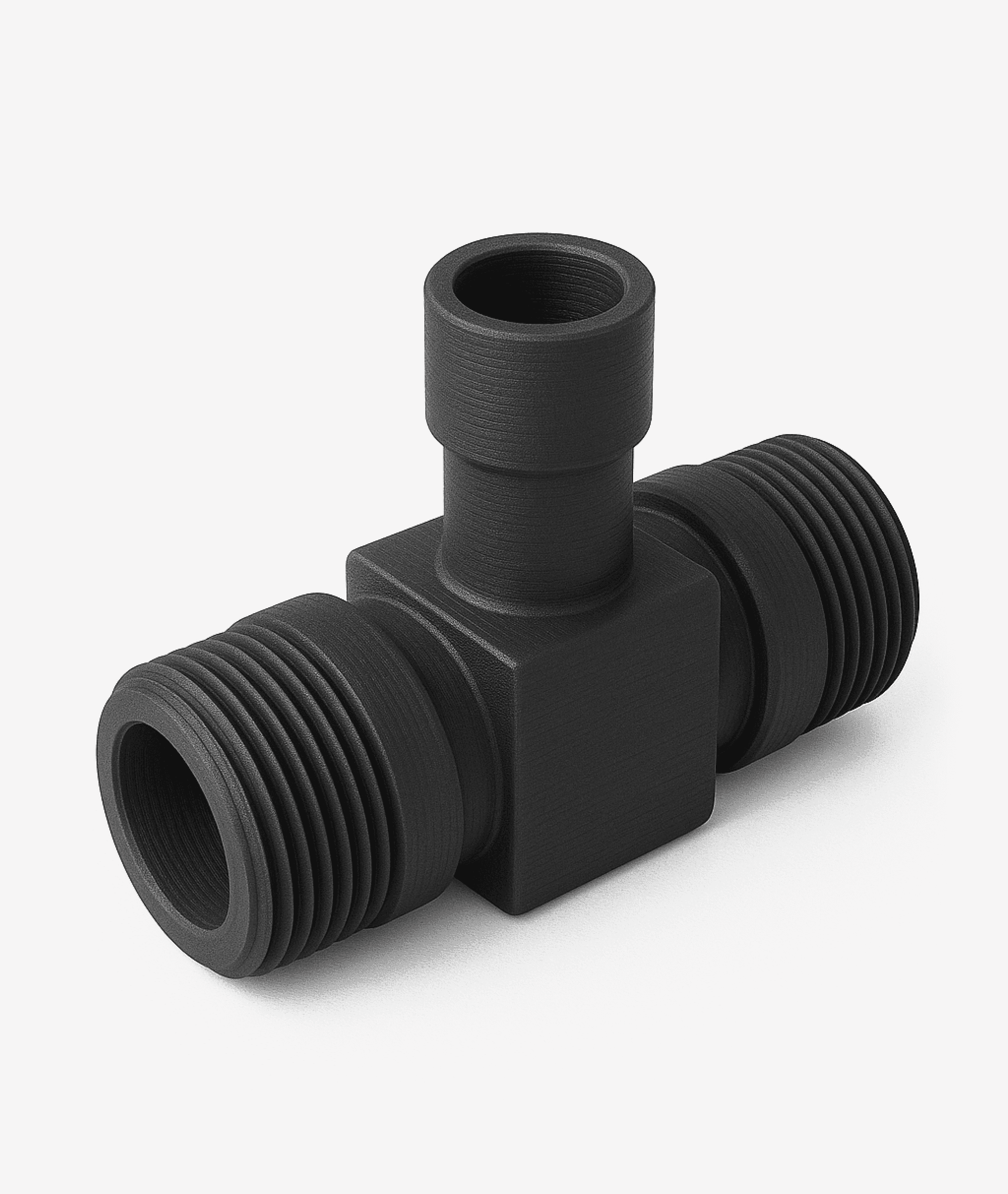
Applications
Jigs, gearboxes, brackets.
Why it's worth it
Tooling in hours, not weeks. Small-batch costs drop 5–10x while accuracy stays the same.
02
Architecture
Applications
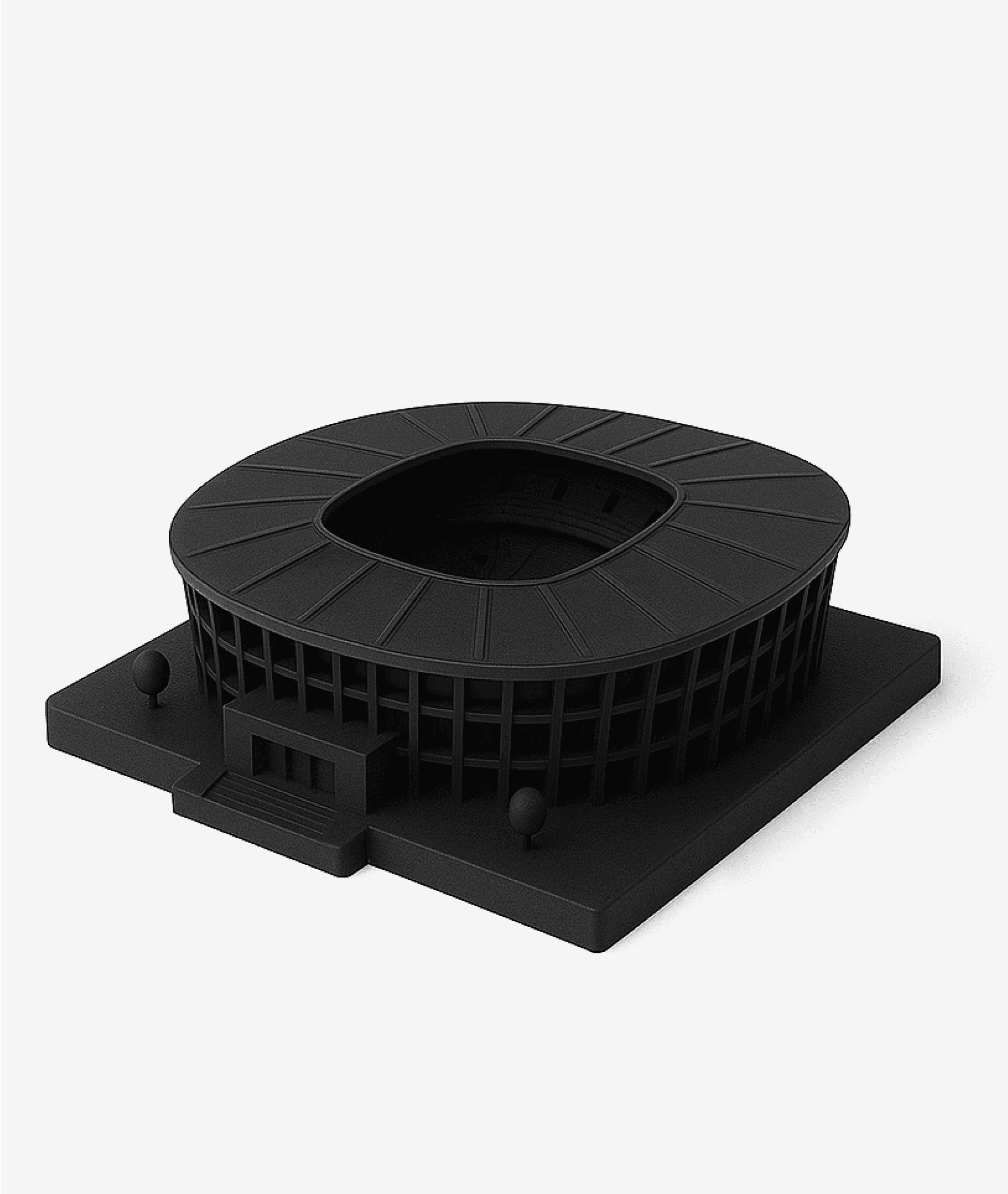
Building models, facades, landscapes.
Why it's worth it
Clients see a physical model before ground is broken — approvals happen faster.
03
Railway
Applications
Fasteners, sensor housings, cable channels.
Why it's worth it
The railcar doesn't sit idle while the part ships from a warehouse. Print on-site — minimal downtime.
04
Medical
Applications
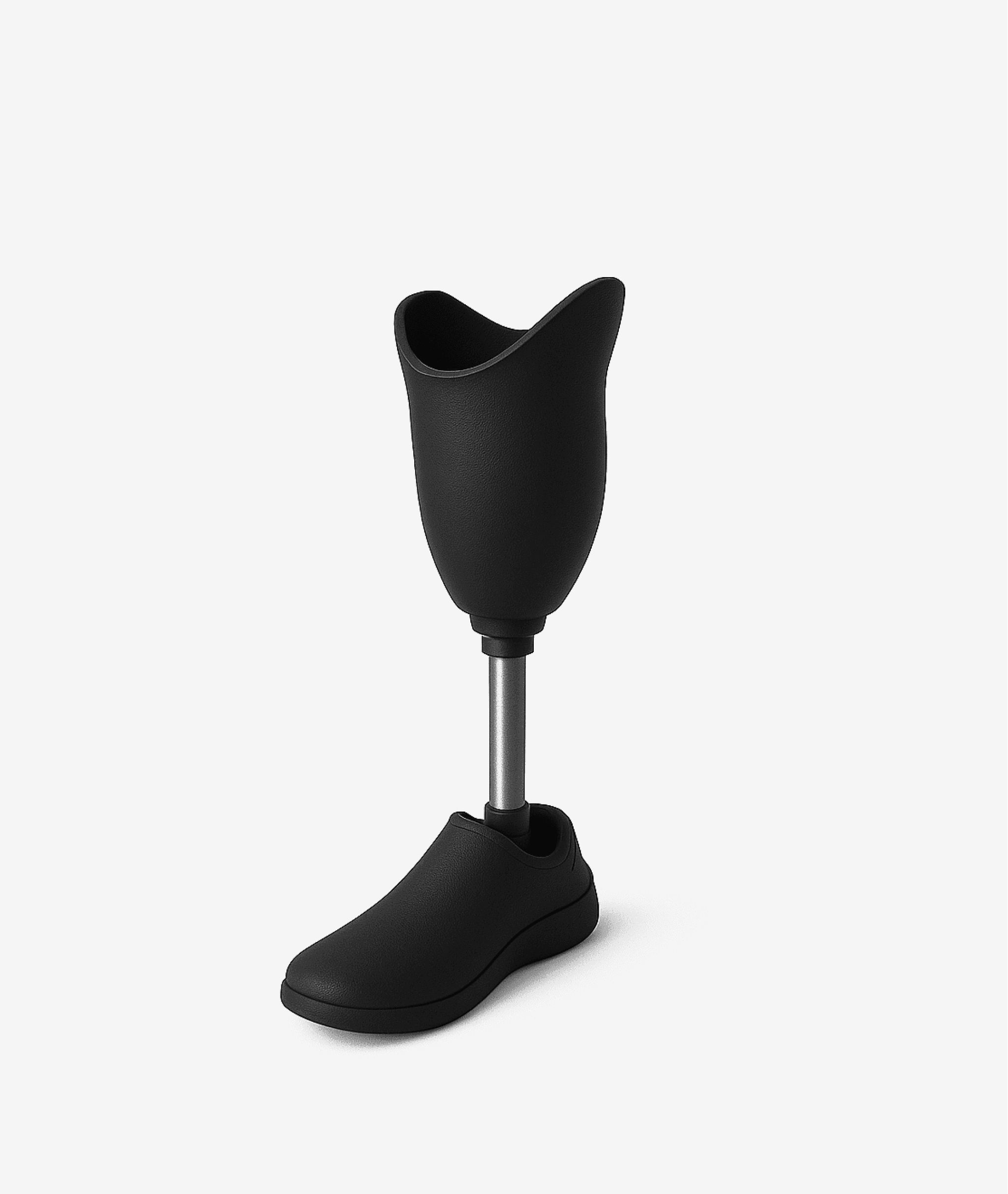
Orthoses, prosthetics, anatomical models.
Why it's worth it
Every piece fits the patient's anatomy exactly. No molds needed, ready in a day.
05
Aerospace
Applications
Covers, ducts, fasteners.
Why it's worth it
Lighter part, more complex geometry — and still ready overnight instead of a month on the mill.
06
Petrochemicals
Applications
Mechanisms, housings, training models.
Why it's worth it
Test the material and shape in days rather than waiting months for production tooling.
07
Shipbuilding
Applications
Supports, gaskets, small hardware.
Why it's worth it
The yard doesn't wait on a supplier — parts print right in the dock, repairs stay on schedule.
08
Instrumentation
Applications
Enclosures, covers, PCB holders.
Why it's worth it
Changed the PCB layout? Reprint the enclosure. No retooling, no missed deadlines.
Don't see your industry?
Tell us what your facility produces — we'll find a solution to cut costs and speed up part production
Mechanical engineering
Applications
Jigs, gearboxes, brackets.
We print tooling and structural elements for assembly and repair: positioning jigs, gearbox housings, fixtures. This speeds up new line launches and allows quick reconfiguration of assemblies.
Why it's worth it
Tooling in hours, not weeks. Small-batch costs drop 5–10x while accuracy stays the same.
Don't see your industry?
Tell us what your facility produces — we'll find a solution to cut costs and speed up part production
We'll calculate the savingsfrom 3D printingfor your production
We'll evaluate your parts, compare with your current method, and show where 3D printing is more cost-effective.