






3D Printing in Medicine: Anatomical Models, Laboratory Fixtures, and Equipment Prototyping
Protype CD400 / CD400HTPA12TPUPCABS
Why the Medical Sector Benefits from Additive Manufacturing
The medical industry places high demands on precision, individualization, and development speed. Anatomical models for preoperative planning, housings and enclosures for diagnostic equipment, laboratory fixtures -- each of these tasks involves working with non-standard geometry and, typically, low production volumes.
The conventional approach -- outsourcing to external workshops, CNC milling, or injection molding -- takes weeks. For tasks where a model is needed before a specific surgical procedure, or where a device housing prototype must go through multiple iterations on a short timeline, such lead times can be unacceptable.
Industrial 3D printing (FFF/FDM with engineering-grade polymers) enables a different approach: a digital model is sent to the printer directly, without intermediate tooling. This can help reduce the path from medical imaging data or a CAD model to a physical object from several weeks to several hours.
Important clarification. The Protype CD400 and CD400HT are general-purpose industrial FFF printers. They are not certified for the manufacture of implantable devices or items intended for direct patient contact. The scope of application in medicine is primarily anatomical models for planning and training, device housing prototypes, laboratory fixtures, and tooling.
Typical Applications in the Medical Sector
Anatomical models for surgical planning. Models based on CT/MRI data that allow surgeons to evaluate patient-specific anatomy before a procedure. Bones, vessels, organs -- at full scale.
Surgical guides and templates (non-implantable). Guides and positioning templates used for access planning. Not intended for patient contact during surgery.
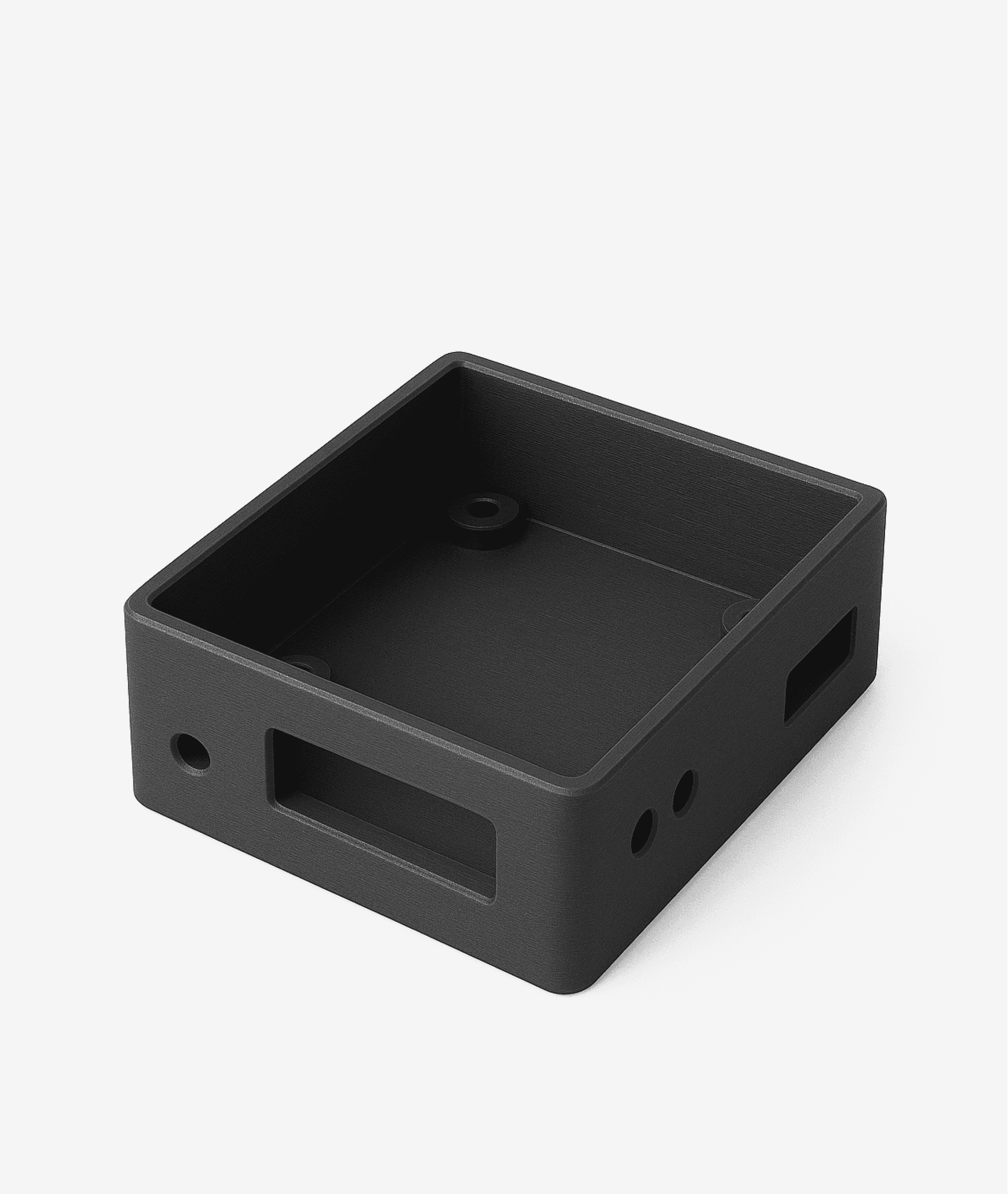
Medical device housing prototypes. Design iterations for enclosures of diagnostic instruments, monitors, pumps, dental equipment -- verifying ergonomics, component layout, and assembly.
Laboratory fixtures and holders. Cuvette racks, test tube holders, optical element mounts, calibration fixtures -- custom accessories for specific laboratory equipment.
Educational anatomical models. Models for medical schools and continuing education programs: spine, skull, joints, organ models with pathologies.
Rehabilitation device prototypes. Concept models of orthoses, prosthetic elements, ergonomic aids -- for evaluating form and fit at early development stages.
When 3D printing is particularly valuable in medicine
A patient-specific anatomical model is required for a particular case
A medical device housing is going through multiple design iterations
A laboratory fixture is non-standard and needed as a one-off
An educational institution needs a collection of anatomical models with various pathologies
A prototype must simulate multiple tissue types (bone + soft tissue)
Application Scenarios
01
Preoperative anatomical model
A surgeon is preparing for a complex craniofacial procedure. CT data is segmented in specialized software, producing STL models of bone structures and soft tissues. On the CD400 with two independent extruders (IDEX), the model is printed in two materials: rigid PA12 to represent bone, and flexible TPU for soft tissue structures. The result is a full-scale tactile model on which the surgeon can plan the approach and evaluate spatial relationships. The 400x400x400 mm build volume allows printing a skull or pelvis model as a single piece, without sectioning.
02
Medical device housing prototype
A company developing a portable diagnostic device is preparing the next housing iteration. The team needs to verify ergonomics (how the device feels in hand), connector placement, and electronics assembly. The housing is printed in ABS -- a material suitable for form evaluation that also accepts post-processing (sanding, painting). Three iterations are completed in one week, compared to one iteration per month when outsourcing CNC machining.
03
Custom laboratory fixtures
A research laboratory uses equipment from multiple manufacturers. Standard holders do not fit the specific configuration. Cuvette racks, adapters for non-standard tube diameters, optical sensor mounts -- all are designed and printed on-site from PA12 or PC. XY positioning accuracy of 5 microns ensures the precise fit required for laboratory tooling.
04
Educational anatomical models for a medical school
An anatomy department needs a collection of spine models with various pathologies: disc herniation, scoliosis, stenosis. Each model can be printed from real anonymized CT data. Copy mode (IDEX) allows two identical vertebrae to be printed simultaneously. Students receive tactile models with realistic anatomy rather than schematic plastic teaching aids.
Want to discuss how 3D printing could support your medical or research application?
Individualization without cost increase. Every anatomical model is unique -- and the fabrication cost does not depend on geometric complexity. For 3D printing, there is no cost difference between a standard femur model and a model with a complex fracture pattern. Costs are determined by material volume and print time.
Faster device development iterations. A medical device housing prototype can be ready in hours rather than weeks. This enables consideration of a greater number of design variants at early stages, when the cost of changes is minimal.
Multi-material printing. Two independent extruders (IDEX) allow combining materials in a single build: a rigid frame with a flexible shell, primary material with soluble support. For anatomical models, this can help convey tactile differences between tissue types.
Laboratory self-sufficiency. Instead of waiting for an external vendor, fixtures and accessories are manufactured on-site. The digital model is stored and can be reproduced at any time.
3D Printing and Artificial Intelligence: Applications in a Medical Context
The combination of 3D printing with AI tools can help automate and accelerate several stages of model preparation. Some of these approaches are already implemented in specialized software; others are at the stage of active development.
Medical image segmentation. Neural network algorithms can automatically delineate structures (bones, vessels, organs) from CT and MRI data. This can significantly reduce 3D model preparation time for printing -- from several hours of manual segmentation to minutes.
Automated model preparation from DICOM data. Specialized software with AI components can automate the chain from DICOM to segmentation to STL to print-ready file, lowering the entry barrier for medical professionals without deep 3D modeling experience.
Generative design for medical device ergonomics. Optimization algorithms can assist in designing housings, handles, and control elements for medical equipment with ergonomic requirements in mind -- minimum weight while maintaining strength, optimal grip geometry.
Print parameter optimization. Machine learning algorithms can identify optimal parameters (temperature, speed, part orientation, support structure) for a given material and geometry. This is particularly relevant when working with flexible materials like TPU, where the processing window can be narrow.
Quality assurance. Machine vision systems combined with data analytics can help detect print defects at early stages -- important for anatomical models where geometric reproduction accuracy has implications for surgical planning.
Why Protype CD400 and CD400HT
Precision for medical models. XY positioning accuracy of 5 microns / Z of 2 microns and minimum layer thickness of 0.05 mm provide a level of detail sufficient to reproduce fine anatomical structures: vessel walls, trabecular patterns, and small bone processes.
Large build volume. 400x400x400 mm on the CD400 -- sufficient for printing full-scale anatomical models (skull, pelvis, spine segment) without sectioning. A single-piece model more accurately conveys spatial relationships.
Multi-material printing (IDEX). Two independent extruders enable combining rigid and flexible materials in a single model (PA12 + TPU), as well as using soluble supports for complex internal cavities -- for example, vascular network models.
Engineering materials. PA12 -- chemically resistant, dimensionally stable. TPU -- flexible, simulates soft tissues. PC -- strong and transparent (after post-processing), suitable for housings. ABS -- a versatile prototyping material. Open material architecture -- no vendor lock-in.
High-temperature materials (CD400HT). Chamber up to 150 degrees C (delta T < 1 degrees C), bed up to 250 degrees C, drying chambers up to 130 degrees C. Supports PEEK, PEKK, and ULTEM -- materials with documented biocompatibility properties (subject to appropriate end-product certification), high strength, and sterilization resistance.
Production-grade autonomy. Automatic filament feed (4x 3 kg spools), integrated drying chambers (2x up to 80 degrees C on CD400), automatic bed leveling, monitoring camera. The printer can operate autonomously -- an anatomical model print job started in the evening can be complete by morning.
Protype offers a Try & Buy program: use the printer at your facility for 3 months, and if you purchase, 100% of the rental cost is credited toward the purchase price. This allows you to evaluate the real-world impact of 3D printing on your specific applications -- with no obligation.
Frequently Asked Questions
Want to evaluate how 3D printing can support your medical applications?
You can also take advantage of the Try & Buy program: 3 months of on-site evaluation with 100% of rental costs credited toward purchase.
We integrate Protype into production cycles across industries—from Education to Aerospace
Where Protype printers already work
01
Mechanical engineering
Applications
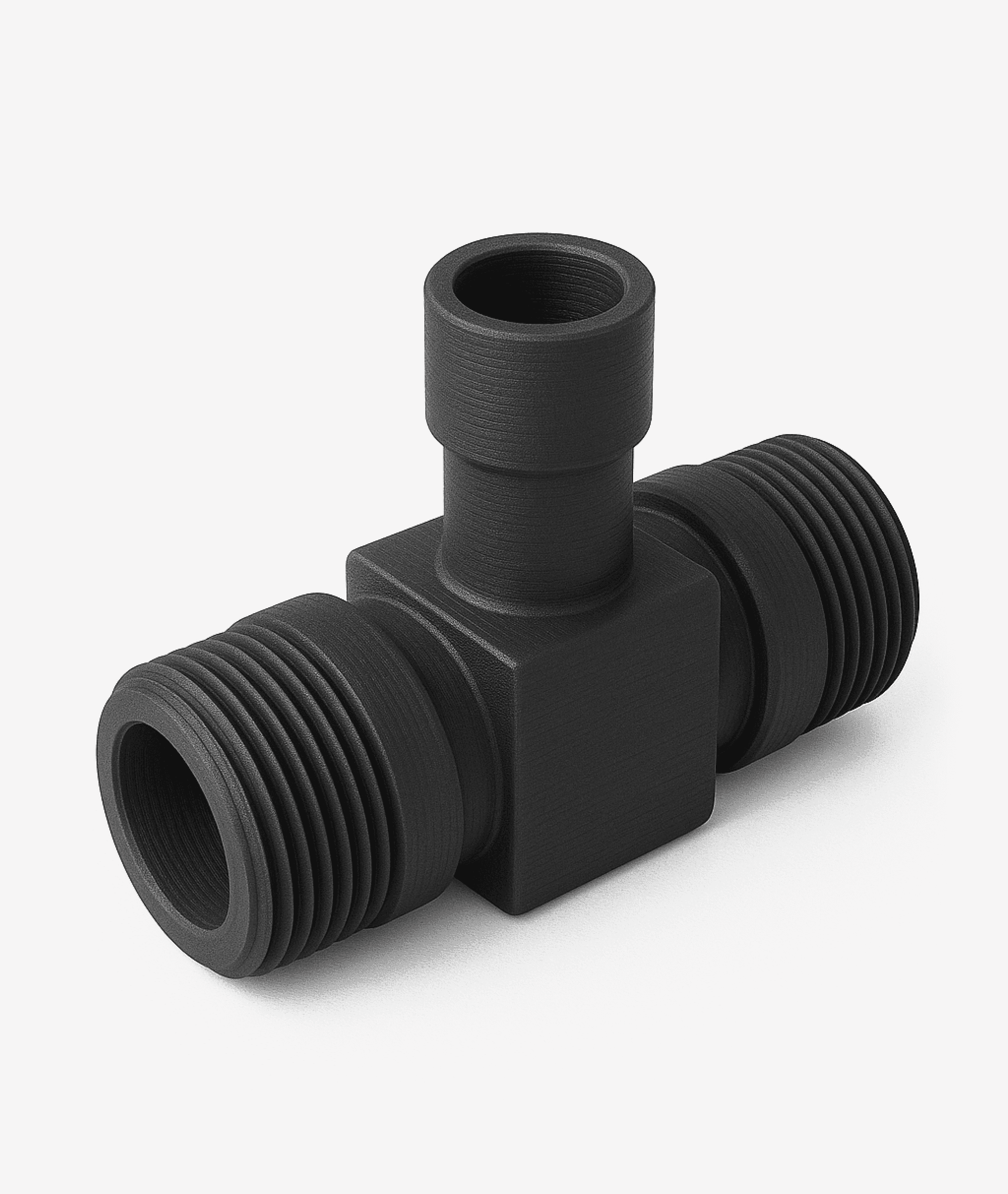
Jigs, gearboxes, brackets.
Why it's worth it
Tooling in hours, not weeks. Small-batch costs drop 5–10x while accuracy stays the same.
02
Architecture
Applications
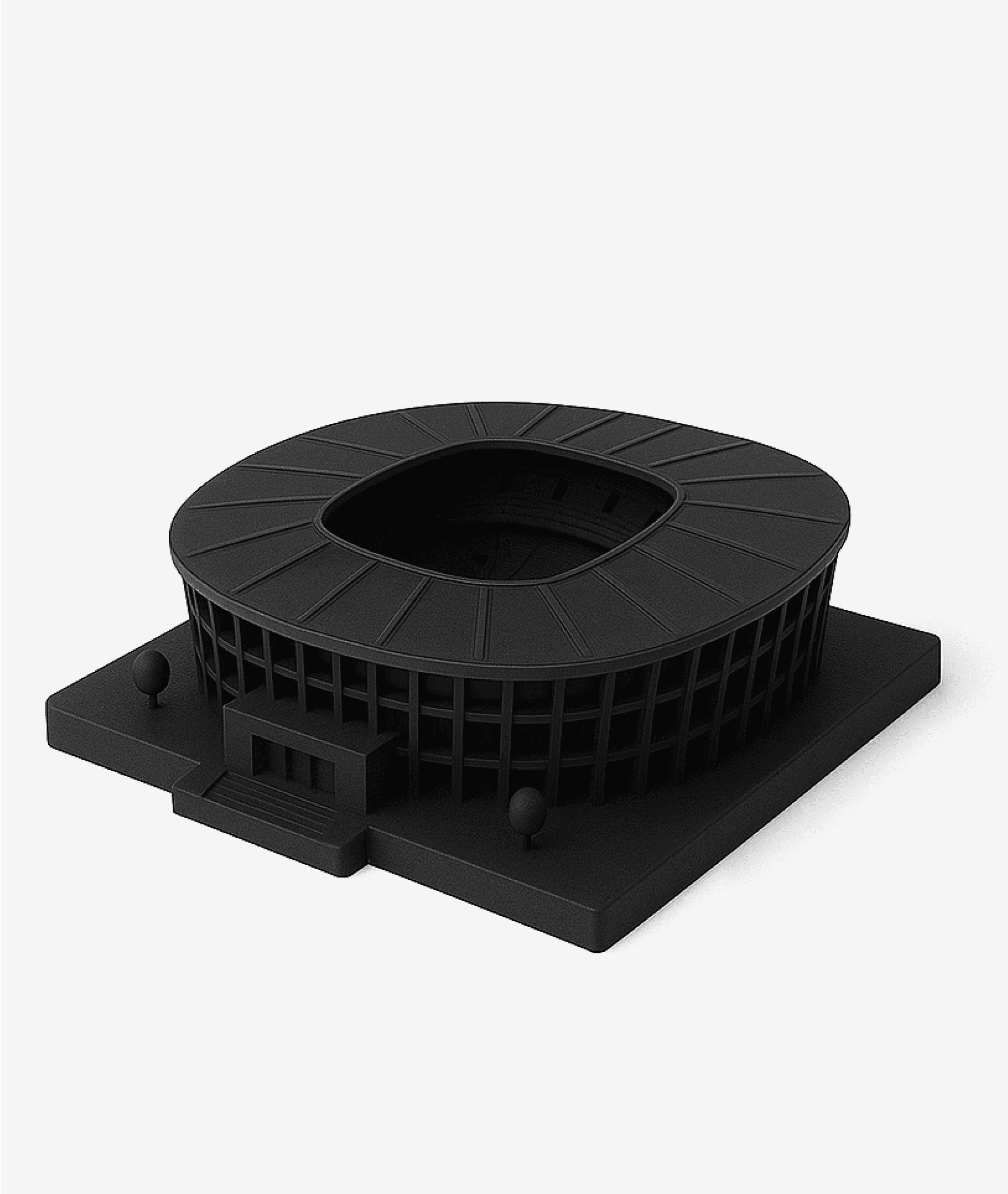
Building models, facades, landscapes.
Why it's worth it
Clients see a physical model before ground is broken — approvals happen faster.
03
Railway
Applications
Fasteners, sensor housings, cable channels.
Why it's worth it
The railcar doesn't sit idle while the part ships from a warehouse. Print on-site — minimal downtime.
04
Education & R&D
Applications
Fixtures, gears, trays.
Why it's worth it
A failed prototype isn't a setback — it's the next iteration. A new one prints in an hour.
05
Aerospace
Applications
Covers, ducts, fasteners.
Why it's worth it
Lighter part, more complex geometry — and still ready overnight instead of a month on the mill.
06
Petrochemicals
Applications
Mechanisms, housings, training models.
Why it's worth it
Test the material and shape in days rather than waiting months for production tooling.
07
Shipbuilding
Applications
Supports, gaskets, small hardware.
Why it's worth it
The yard doesn't wait on a supplier — parts print right in the dock, repairs stay on schedule.
08
Instrumentation
Applications
Enclosures, covers, PCB holders.
Why it's worth it
Changed the PCB layout? Reprint the enclosure. No retooling, no missed deadlines.
Don't see your industry?
Tell us what your facility produces — we'll find a solution to cut costs and speed up part production
Mechanical engineering
Applications
Jigs, gearboxes, brackets.
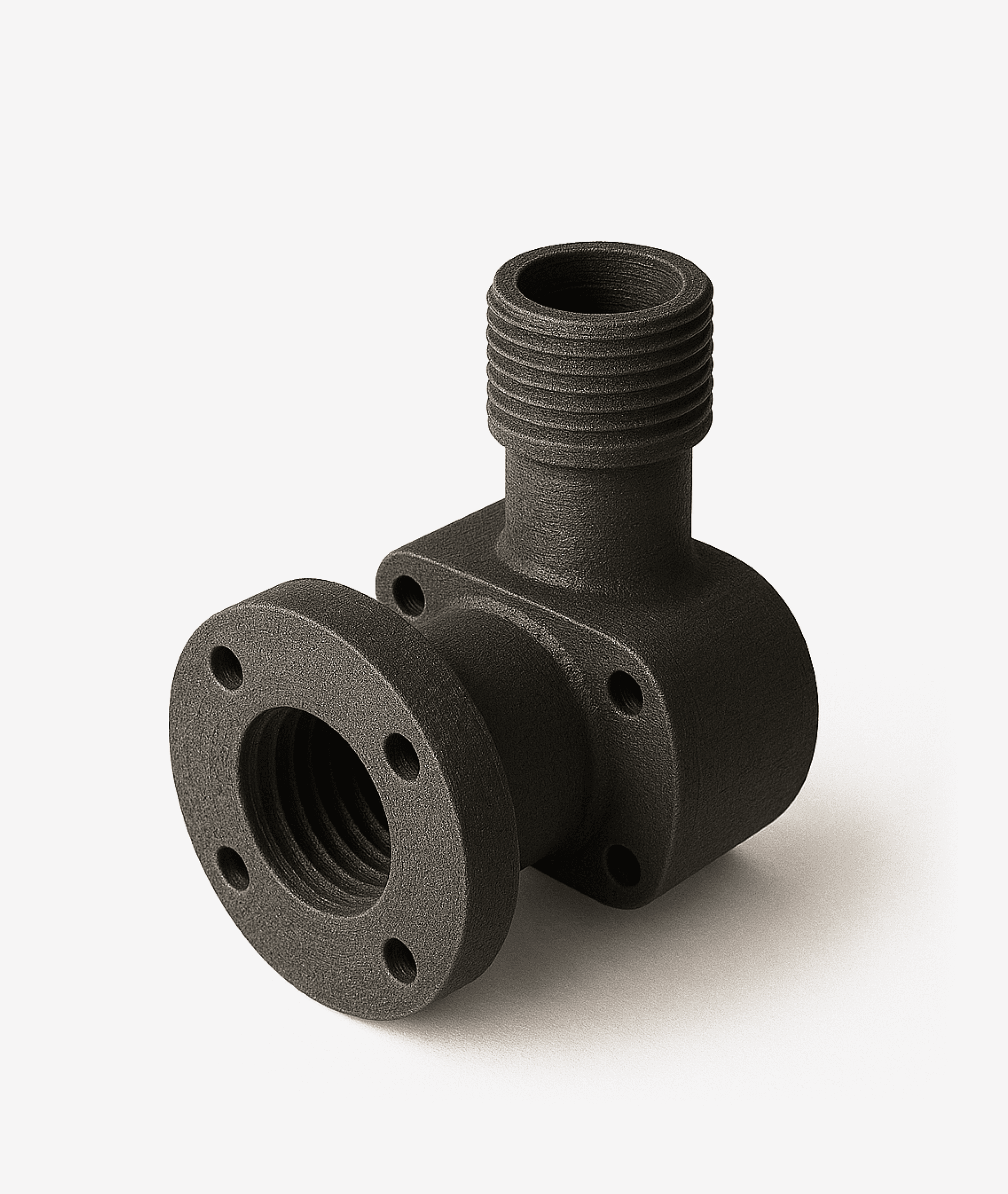
We print tooling and structural elements for assembly and repair: positioning jigs, gearbox housings, fixtures. This speeds up new line launches and allows quick reconfiguration of assemblies.
Why it's worth it
Tooling in hours, not weeks. Small-batch costs drop 5–10x while accuracy stays the same.
Don't see your industry?
Tell us what your facility produces — we'll find a solution to cut costs and speed up part production
We'll calculate the savingsfrom 3D printingfor your production
We'll evaluate your parts, compare with your current method, and show where 3D printing is more cost-effective.