
3D Printing in Instrumentation: Enclosures, Components, and Low-Volume Production
Protype CD400 / CD400HT + FILOABSPC-ABSPA-CFPA
Why the Instrumentation Industry Is Turning to Additive Manufacturing
Instrumentation is an industry where precision and geometric complexity go hand in hand. Enclosures for measurement devices, sensor mounts, split housings, control panels — these are all parts with tight tolerances, thin walls, and frequently complex internal geometry. At the same time, production volumes are often modest: from single units to batches of a few dozen.
The conventional route for fabricating enclosure parts — injection molding or CNC machining — is justified at serial production volumes. But when the task involves new product development, low-volume production, or custom modifications, tooling costs and delivery lead times become the bottleneck. An injection mold for an enclosure can cost tens of thousands of dollars and take a month to produce — while the design may not yet be finalized.
Industrial 3D printing (FFF/FDM with engineering polymers) enables consideration of a different approach. A CAD model goes directly to the printer, with no intermediate tooling. This can substantially compress the development cycle — especially during prototyping and low-volume manufacturing phases where each iteration is expensive in both time and budget.
For organizations facing supply chain constraints, an additional factor is component availability. When original enclosures or mounting hardware are unavailable due to logistical disruptions, on-site 3D printing from engineering plastics can help restore production without months-long procurement delays.
Typical Applications for 3D Printing in Instrumentation
Instrument enclosures and housings. Protective shells for electronics, measurement modules, and power supplies. Printing from ABS or PC-ABS with precise board and connector fitment.
Sensor mounts and brackets. Mounting elements for positioning sensors, optical modules, and antennas. Require precise alignment with mating features and mounting holes.
PCB test fixtures. Jigs with precisely placed pogo-pin contact points for functional testing of printed circuit boards.
Cable organizers and raceways. Elements for routing wiring inside instrument cabinets and rack enclosures.
Front panel prototypes. Verifying ergonomics, indicator placement, button layout, and connector positioning before committing to production tooling.
Low-volume custom enclosures. Batches of 10-50 units for specialized instruments, laboratory equipment, and industrial controllers.
Ergonomic grips and handles. Prototyping the form factor of handheld instruments, including dual-material designs (rigid core + soft TPU grip zones).
Connector housings and cable assemblies. Protective and mounting elements for non-standard cable assemblies.
When 3D printing is particularly valuable in instrumentation
An instrument enclosure is going through multiple design iterations
A small batch (10-50 units) is needed without the cost of injection mold tooling
Two materials need to be combined: a rigid frame and soft inserts
A PCB test fixture is needed for every board revision
The original enclosure or mounting hardware has been discontinued
Production Application Scenarios
01
Iterative instrument enclosure prototyping
An engineering team is developing a new measurement device. The enclosure must accommodate the PCB, display, connectors, and provide adequate thermal management. The first prototype from ABS is printed overnight. The next morning, engineers assemble the mockup, check board fitment, connector access, and assembly ease. Three issues are identified — the model is revised, and a second prototype is ready by the following morning. In two weeks — four iterations instead of one over two months when ordering CNC machined parts.
02
Low-volume custom enclosures (10-50 units)
A company manufactures industrial controllers in several variants, each with its own connector and indicator configuration. An injection mold for each variant is uneconomical at these volumes. Enclosures are printed from PC-ABS — a material that provides adequate impact resistance and thermal stability. IDEX Copy mode enables printing two identical enclosures simultaneously, doubling output per shift.
03
PCB test fixtures
The quality assurance department tests every PCB revision. Each revision requires a fixture with precisely placed pogo-pin contact points. XY positioning accuracy of 5 microns and a minimum layer thickness of 0.05 mm help ensure reliable contact alignment. The fixture is printed from PA-CF — a material with high dimensional stability and minimal shrinkage. A new fixture can be ready the same day a revised board arrives.
A portable measurement device is in development. The enclosure must be rigid, but the grip zones need to be soft for comfortable extended use. The CD400's IDEX architecture enables printing a dual-material part: a rigid ABS core with soft TPU inserts. Engineers test several grip form variations, evaluating ergonomics with real electronics inside, before finalizing the design.
Want to evaluate whether 3D printing fits your instrumentation workflow?
Shorter development cycles. An enclosure or bracket prototype can be ready in hours rather than weeks. This enables more design iterations within the same budget and project timeline.
Instrument-grade accuracy. XY positioning 5 microns and Z positioning 2 microns, minimum layer 0.05 mm, nozzles from 0.3 mm — parameters that enable consideration of printing parts with board mounting features, snap-fits, and thin walls typical of instrument enclosures.
Economics of small batches. At volumes of 10-50 units, 3D printing is typically less expensive than investing in injection mold tooling. Per-unit cost is independent of batch size — the first part costs the same as the fiftieth.
Dual-material printing. The CD400's IDEX architecture enables combining materials with different properties in a single part: rigid frame + soft seals, structural plastic + soluble support for complex internal geometry.
Digital inventory. Instead of warehousing physical stocks of enclosures and mounts, store 3D models. Parts are printed on demand, which can help reduce warehousing costs and eliminate the risk of inventory obsolescence.
3D Printing and Artificial Intelligence: Practical Applications in Instrumentation
Combining additive technologies with AI tools opens additional possibilities for instrumentation manufacturers. Several approaches are already in use; others are being adopted.
Parametric enclosure family design. AI-based algorithms can help automate creation of enclosure variants from a single parametric template. Board dimensions, connector set, and mounting type are specified — the system generates a ready-to-print 3D model. This can substantially accelerate development of modifications and custom configurations.
Automated tolerance verification. Geometry analysis algorithms can compare print results (from 3D scan data) against the nominal CAD model, automatically identifying deviations. For instrument parts with tight tolerances, this enables consideration of automated final inspection.
Generative design for EMI shielding. Neural network algorithms can optimize the geometry of internal ribs and lattice structures within an enclosure to improve electromagnetic shielding. Such structures are typically difficult to produce with conventional manufacturing but are achievable with 3D printing.
Print parameter optimization. Machine learning algorithms can select optimal parameters (temperature, speed, orientation, support structure) for a specific material and part geometry, reducing the number of trial prints required.
Predictive inventory planning. Analysis of component and enclosure consumption data can help forecast demand and schedule printing proactively, before a shortage develops.
Why Protype CD400 and CD400HT for Instrumentation
Geometric precision. XY positioning 5 microns / Z positioning 2 microns — the level of accuracy needed for instrument enclosures with board mounting features, snap-fits, and thin-walled elements. Minimum layer thickness of 0.05 mm enables reproduction of fine details: knurling, markings, and board guides.
Fine nozzles for detail. Nozzle range 0.3-1.2 mm. The 0.3 mm nozzle is for detailed enclosure features and thin-walled fixtures. The 0.8-1.2 mm nozzle is for rapid printing of larger parts and early-stage prototypes.
IDEX: two materials, doubled throughput. Two independent extruders. Dual-material mode combines rigid and soft plastics in a single part. Copy and Mirror modes enable simultaneous printing of two identical or mirrored enclosures, doubling output per shift.
Engineering materials. Open material architecture. The CD400 works with ABS, PC-ABS, PA-CF, PA, and other engineering polymers. Built-in drying chambers 2x up to 80 deg C keep moisture-sensitive polyamides in working condition. Auto-feed filament system 4x3 kg supports autonomous operation.
Active thermal chamber. The CD400 chamber at up to 90 deg C reduces internal stresses and warping — critical for enclosure parts with flat surfaces and thin walls. The CD400HT with its chamber up to 150 deg C (Delta-T less than 1 deg C) and build plate up to 250 deg C enables working with PEEK and ULTEM for parts operating at elevated temperatures.
Integration into engineering workflows. ProtypeOS + ProtypeHub (fleet management) + Secure VPN. 22-inch touchscreen interface. LAN/Wi-Fi connectivity. Print speed up to 300 mm/s.
CD400 vs. CD400HT Comparison
Parameter
CD400
CD400HT
Build volume
400x400x400 mm
350x350x400 mm
Chamber temperature
up to 90 °C
up to 150 °C (ΔT < 1 °C)
Build plate temperature
up to 150 °C
up to 250 °C
Hotend temperature
up to 550 °C
up to 550 °C
Drying chambers
2x up to 80 °C
2x up to 130 °C
Key materials
ABS, PC-ABS, PA-CF, PA, TPU
PEEK, PEKK, ULTEM + all CD400 materials
Instrumentation recommendation
Enclosures, fixtures, prototypes, small batches
Parts for elevated-temperature operating conditions
Warranty
12 months
12 months
Try & Buy: 3-month evaluation program
Protype offers a Try & Buy program: use the printer in your production environment for 3 months, and if you purchase, 100% of the rental cost is credited toward the purchase price. Minimal risk — maximum opportunity to evaluate the impact on your instrumentation workflows.
Frequently Asked Questions
Ready to evaluate how 3D printing fits into your instrument development process?
Take advantage of the Try & Buy program: 3 months of on-site evaluation with 100% rental credit toward purchase.
We integrate Protype into production cycles across industries—from Education to Aerospace
Where Protype printers already work
01
Mechanical engineering
Applications
Jigs, gearboxes, brackets.
Why it's worth it
Tooling in hours, not weeks. Small-batch costs drop 5–10x while accuracy stays the same.
02
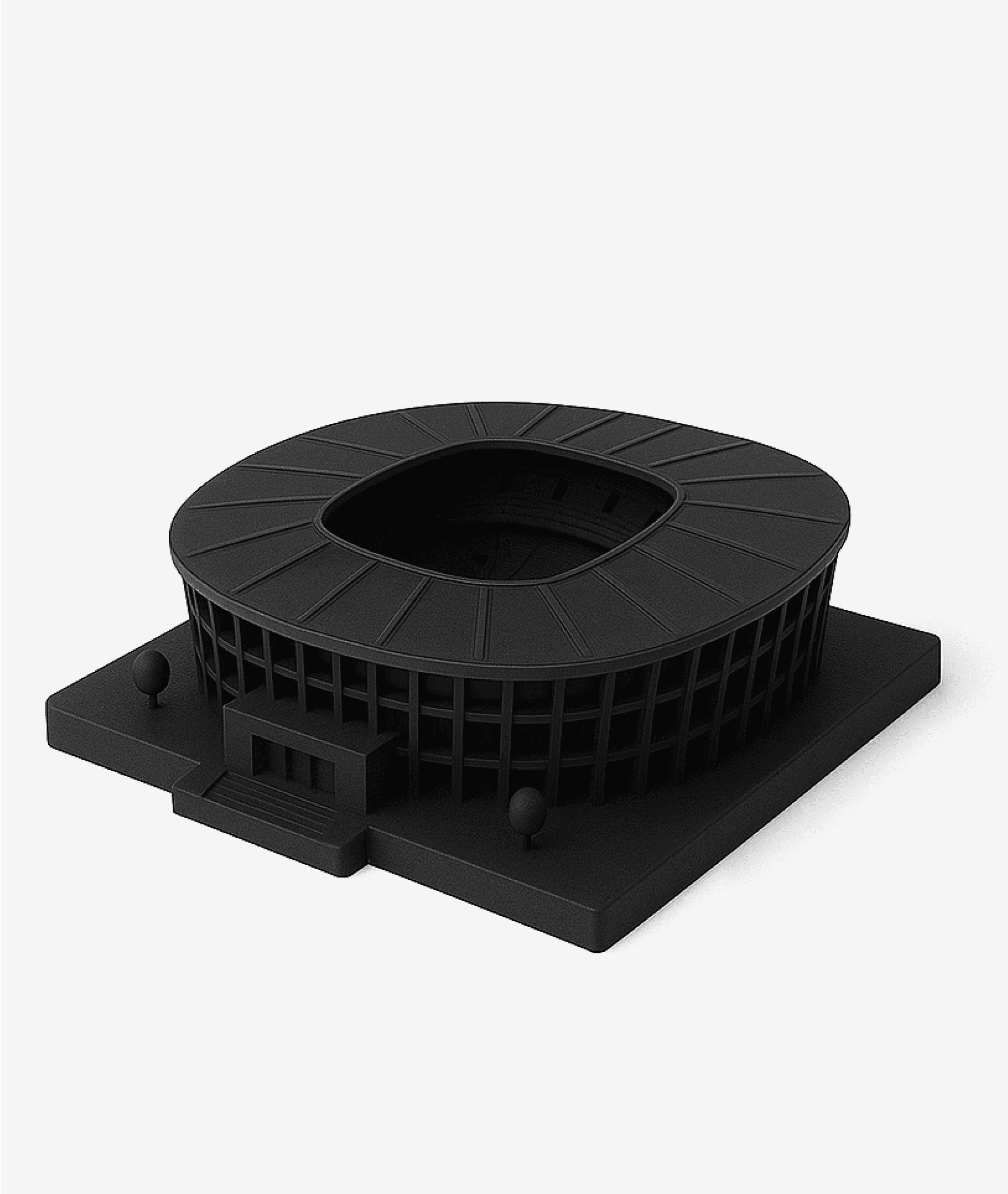
Architecture
Applications
Building models, facades, landscapes.
Why it's worth it
Clients see a physical model before ground is broken — approvals happen faster.
03
Railway
Applications
Fasteners, sensor housings, cable channels.
Why it's worth it
The railcar doesn't sit idle while the part ships from a warehouse. Print on-site — minimal downtime.
04
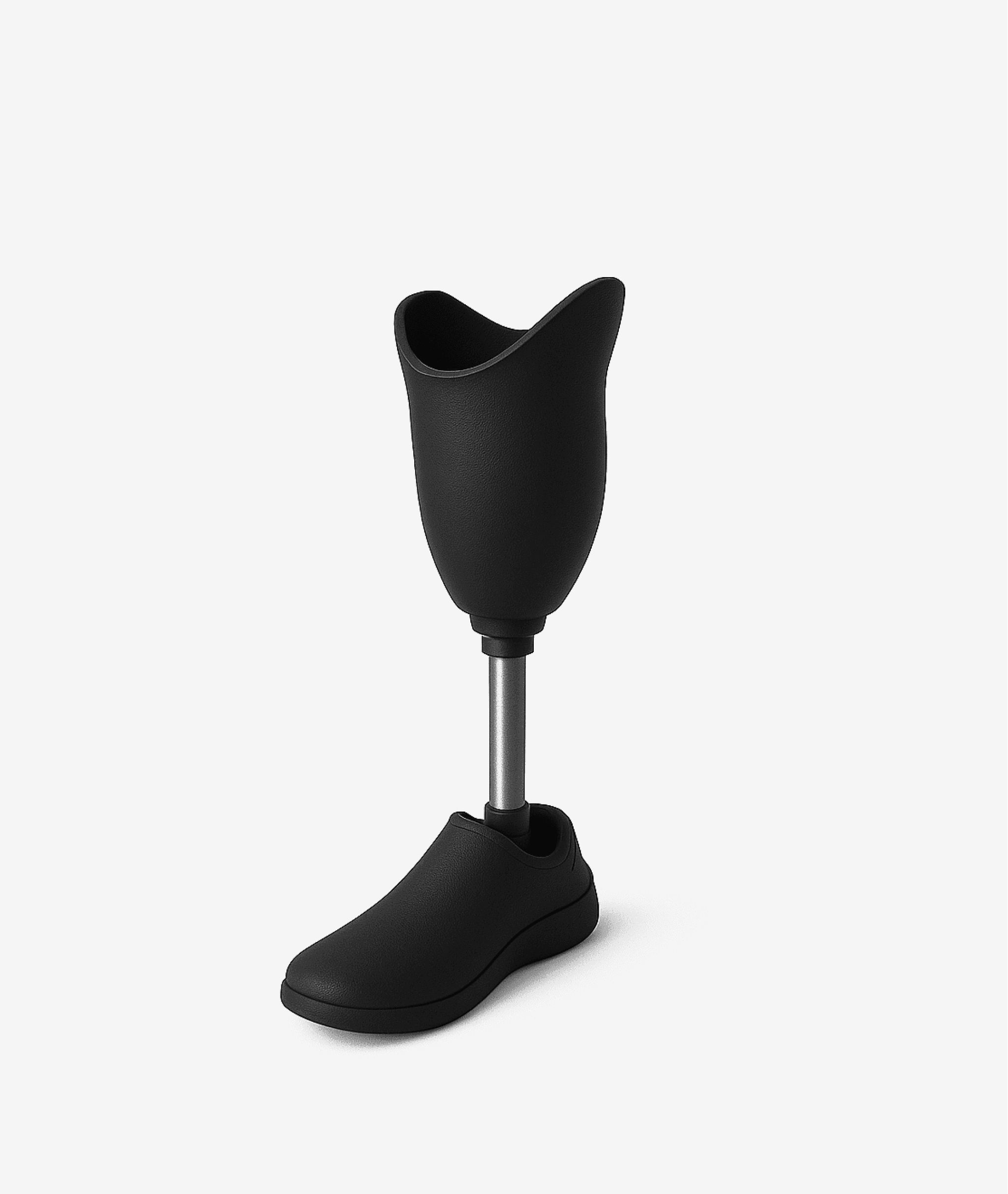
Medical
Applications
Orthoses, prosthetics, anatomical models.
Why it's worth it
Every piece fits the patient's anatomy exactly. No molds needed, ready in a day.
05
Education & R&D
Applications
Fixtures, gears, trays.
Why it's worth it
A failed prototype isn't a setback — it's the next iteration. A new one prints in an hour.
06
Aerospace
Applications
Covers, ducts, fasteners.
Why it's worth it
Lighter part, more complex geometry — and still ready overnight instead of a month on the mill.
07
Petrochemicals
Applications
Mechanisms, housings, training models.
Why it's worth it
Test the material and shape in days rather than waiting months for production tooling.
08
Shipbuilding
Applications
Supports, gaskets, small hardware.
Why it's worth it
The yard doesn't wait on a supplier — parts print right in the dock, repairs stay on schedule.
Don't see your industry?
Tell us what your facility produces — we'll find a solution to cut costs and speed up part production
Mechanical engineering
Applications
Jigs, gearboxes, brackets.
We print tooling and structural elements for assembly and repair: positioning jigs, gearbox housings, fixtures. This speeds up new line launches and allows quick reconfiguration of assemblies.
Why it's worth it
Tooling in hours, not weeks. Small-batch costs drop 5–10x while accuracy stays the same.
Don't see your industry?
Tell us what your facility produces — we'll find a solution to cut costs and speed up part production
We'll calculate the savingsfrom 3D printingfor your production
We'll evaluate your parts, compare with your current method, and show where 3D printing is more cost-effective.