






3D Printing in Shipbuilding: On-Demand Spare Parts, Tooling, and Prototyping

Protype CD400 / CD400HT + FILOPA-CFPC-ABSABSPA6
3D Printing in Shipbuilding: On-Demand Spare Parts, Tooling, and Prototyping

Why Shipbuilding Is Looking at Additive Manufacturing

Shipbuilding is one of the most logistically complex industries. Building and maintaining vessels requires thousands of unique components, many produced in small batches or specific to a particular project. The parts catalog at a typical shipyard runs to tens of thousands of line items, and supply chains stretch across multiple countries.

The conventional path to obtaining a non-standard part — supplier request, approval, manufacturing, shipping — can take anywhere from several weeks to several months. For facilities operating in global maritime supply chains, where imported components may face additional freight and customs lead times, these delays can be even more significant.

Industrial 3D printing (FFF/FDM with engineering polymers) enables consideration of a different approach. A digital model goes directly to the printer — no molds, no minimum order quantities, no waiting for shipment. This can substantially shorten the path from requirement to finished part, especially for one-off components, repair spares, prototypes, and small batches.

An additional factor is the geographic distribution of shipbuilding operations. The shipyard, the dry dock, the vessel at sea — each of these locations can be a point where a part is needed immediately. On-site 3D printing from engineering plastics can help reduce dependence on distant suppliers and physical inventory holdings.


Typical Applications for 3D Printing in Shipbuilding

  • Spare parts for vessel systems. Covers, bushings, adapters, guides for equipment that has failed or been discontinued. Printing from a 3D scan or drawing allows restoration of functionality without waiting for original components.
  • Brackets and mounting hardware. Custom brackets for cable routing, instrument mounting, and auxiliary equipment installation. Every vessel has a unique layout — off-the-shelf hardware does not always fit.
  • Ventilation system components. Adapters, elbows, duct splitters in non-standard cross-sections. PA-CF and PC-ABS provide adequate stiffness and durability for auxiliary ventilation circuits.
  • Interior element prototypes. Panels, trim pieces, decorative elements for cabins and common areas — verifying ergonomics, fit, and aesthetics before committing to serial production.
  • Cable tray fixtures and organizers. Cable combs, tie-down holders, pass-through bushings — each project requires dozens of unique sizes and configurations.
  • Tool holders and service fixtures. Specialized cradles, grips, and assembly templates for work in the confined spaces of engine rooms.
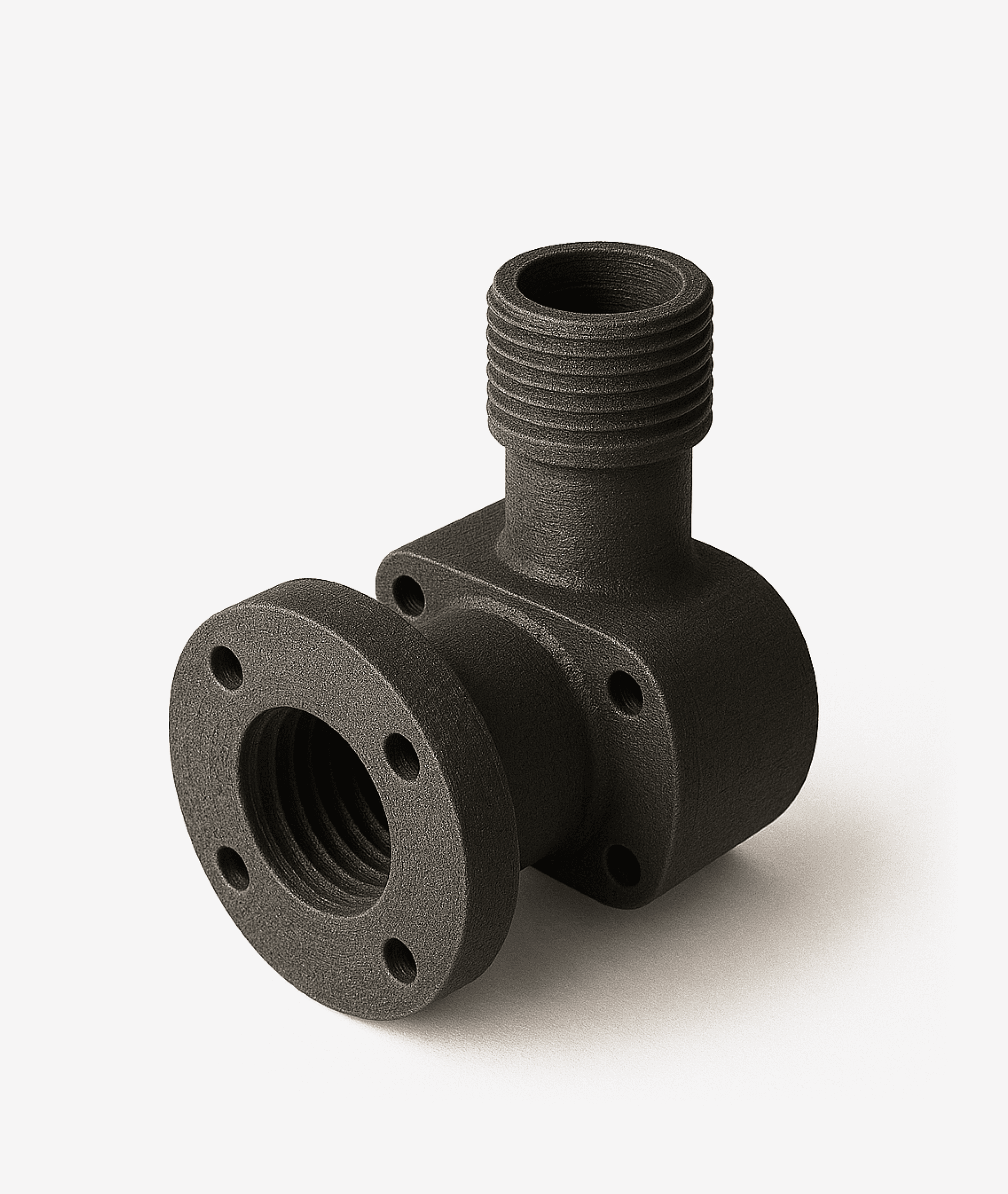
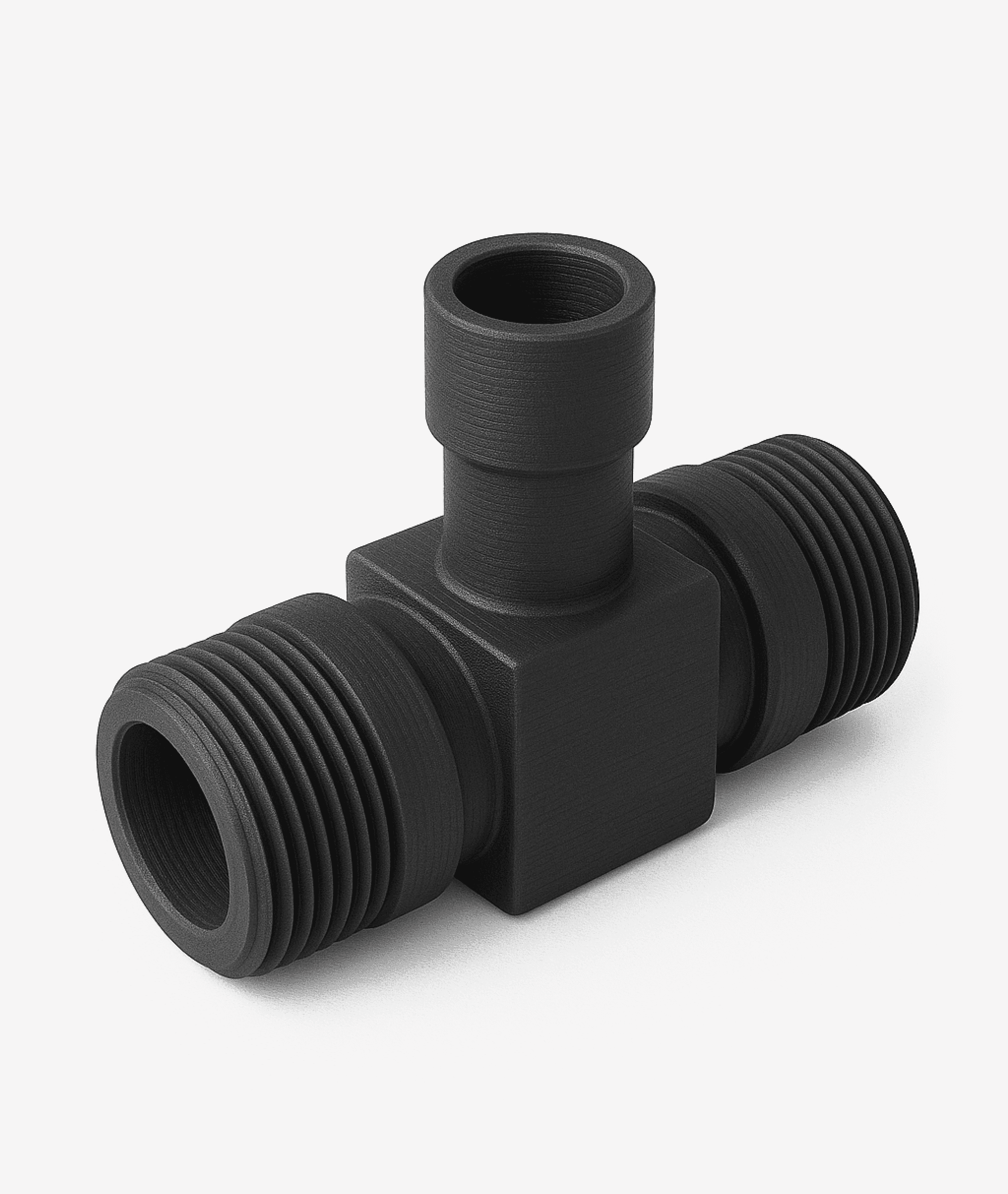
  • Fitting and connector prototypes. Verifying geometry and compatibility before ordering serial metal parts.

When 3D printing is particularly relevant in shipbuilding

  • The original part has been discontinued or is unavailable in the region
  • The vessel is at sea or at a remote facility without quick access to suppliers
  • A custom adapter or bracket is needed for a specific layout configuration
  • Multiple interior design options need evaluation before project approval
  • A small batch of parts does not justify investment in injection mold tooling

Application Scenarios at the Shipyard and On Board

01

Rapid spare part fabrication at the shipyard

During vessel servicing at a repair shipyard, a plastic guide bushing in the pump system is found to be worn out. The original supplier is overseas, with a lead time of 6 weeks or more. The part is scanned or modeled from measurements, then printed from PA-CF on the CD400. The repair is completed in hours, not weeks. The digital model is saved in the library — the next time it is needed, the part is reproduced without redesign effort.

02

Cabin interior prototyping

A design team is developing the interior for a passenger cabin. Before finalizing the configuration, they need to verify panel ergonomics, trim fit, and control element placement. Full-scale prototypes from ABS are printed overnight and installed the next morning in the mockup cabin. In one week — three to four design iterations instead of one when ordering from an external contractor.

03

Specialized tool holders for maintenance crews

A service crew is working in an engine room where space is limited. Standard toolboxes are impractical — specialized cradles mounted to the bulkhead are needed. An engineer models the holders to match the specific tool set and mounting points, then prints them from PC-ABS. Each holder is adapted to a particular compartment.

04

Non-standard ventilation duct adapters

During a vessel ventilation upgrade, adapters between ducts of different cross-sections are required. Standard adapters do not fit the non-typical layout. Modeling custom adapters and printing from PA6 on the CD400 produces a complete set in 1-2 days. IDEX Copy mode doubles throughput when printing identical parts.

Want to evaluate whether 3D printing fits your shipyard's workflow?

Request a consultation

Practical Benefits of Adoption

Reduced downtime. A repair part printed at the shipyard or on board enables consideration of restoring vessel operability without extended supply chain delays. For critical systems, this can mean the difference between hours and weeks of downtime.

Lower supply chain exposure. On-site 3D printing from engineering plastics can help reduce dependence on overseas component suppliers — a relevant factor for shipyards operating in regions with complex logistics.

Optimized spare parts inventory. Instead of warehousing thousands of rarely needed part numbers, store digital models and print on demand. This is particularly relevant for project-specific parts unique to a particular vessel.

Faster design cycles. Prototyping interiors, fittings, and layout solutions on-site, without engaging external contractors, can shorten the development cycle at each iteration.

Operational autonomy. The auto-feed filament system (4x3 kg) supports unattended operation for over 10 days — the printer can execute jobs without continuous operator presence. This is especially valuable at shipyards with shift schedules and in potential on-board deployments.

Pump system guidesCable routing bracketsDuct adaptersCovers and housingsTool holdersCable organizersCabin panel prototypesAssembly templatesEquipment fixturesFitting prototypes

3D Printing and Artificial Intelligence: Opportunities for Shipbuilding

Combining additive technologies with AI tools opens additional possibilities for shipbuilding enterprises. Several approaches are already finding practical application.

Digital maritime spare parts warehouse. Building a database of 3D models for vessel components enables a "digital warehouse" of parts. AI-based classification and search algorithms can help quickly locate the right model by parameters, catalog number, or even a photograph of a damaged part.

3D scanning and automated reverse engineering. Combining a 3D scanner with automated geometry reconstruction algorithms enables accelerated creation of digital models for existing parts. This is particularly relevant for components where original documentation has been lost — a common situation for vessels with extended service lives.

Predictive maintenance for vessel systems. Neural network models trained on runtime and failure data for marine equipment can help predict which parts will need replacement in the near future. Combined with 3D printing, this enables consideration of proactive spare part fabrication before a breakdown occurs.

Print parameter optimization for marine conditions. Machine learning algorithms can select optimal print parameters (temperature, speed, orientation, support structure) accounting for requirements such as chemical resistance, vibration loading, and other factors characteristic of marine service.

Production scheduling at the shipyard. When multiple printers are available, AI can help distribute jobs considering construction or repair schedule priorities, equipment utilization, and material availability.


Why Protype CD400 and CD400HT

Large build volume. 400x400x400 mm on the CD400 — a volume that enables printing large-format marine parts: structural elements, duct sections, full-scale brackets. For shipbuilding, where parts are typically larger than in other industries, this is a significant factor.

Engineering materials for marine conditions. PA-CF provides high stiffness and vibration resistance. PC-ABS delivers impact strength and dimensional stability. PA6 offers chemical resistance and wear resistance. Open material architecture — no filament supplier lock-in. Built-in drying chambers 2x up to 80 deg C keep moisture-sensitive materials in working condition — critical when operating in high-humidity environments.

Autonomy for the shipyard and potentially for on-board use. IDEX — two independent extruders. Copy and Mirror modes double output per shift. Auto-feed filament system 4x3 kg supports unattended operation for over 10 days. Automatic bed leveling, nozzle cleaning, monitoring camera — the printer is designed for operation with minimal operator involvement, which is important for production sites with limited staffing.

CD400HT for chemically resistant parts. Chamber up to 150 deg C, build plate up to 250 deg C, drying chambers up to 130 deg C. Build volume 350x350x400 mm. Supports PEEK, PEKK, ULTEM — materials with elevated chemical resistance and thermal stability. May be relevant for parts in contact with aggressive media in vessel systems.

Integration into production infrastructure. ProtypeOS + ProtypeHub (fleet management) + Secure VPN. LAN/Wi-Fi connectivity. Remote monitoring and job submission — relevant for distributed shipyard operations.

Versatile configuration. Nozzle range 0.3-1.2 mm and layer thickness 0.05-0.75 mm. Speed up to 300 mm/s. One printer — for both precision fitting prototypes and rapid printing of large structural brackets.


CD400 vs. CD400HT Comparison

ParameterCD400CD400HT
Build volume400x400x400 mm350x350x400 mm
Chamber temperatureup to 90 °Cup to 150 °C (ΔT < 1 °C)
Build plate temperatureup to 150 °Cup to 250 °C
Hotend temperatureup to 550 °Cup to 550 °C
Drying chambers2x up to 80 °C2x up to 130 °C
Key materialsPA-CF, PC-ABS, ABS, PA6PEEK, PEKK, ULTEM + all CD400 materials
RecommendationSpare parts, tooling, prototypes, large-format partsChemically resistant and high-temperature parts
Warranty12 months12 months

Try & Buy: 3-month evaluation program

Protype offers a Try & Buy program: use the printer at your shipyard or production facility for 3 months, and if you purchase, 100% of the rental cost is credited toward the purchase price. Minimal risk — a real opportunity to measure the impact in your production environment.


Frequently Asked Questions


Ready to evaluate how 3D printing fits into your shipyard's operations?

Take advantage of the Try & Buy program: 3 months of on-site evaluation with 100% rental credit toward purchase.

02

Application areas

We integrate Protype into production cycles across industries—from Education to Aerospace

Where Protype printers already work

01

Mechanical engineering
Mechanical engineering

Applications

Jigs, gearboxes, brackets.

Why it's worth it

Tooling in hours, not weeks. Small-batch costs drop 5–10x while accuracy stays the same.

02

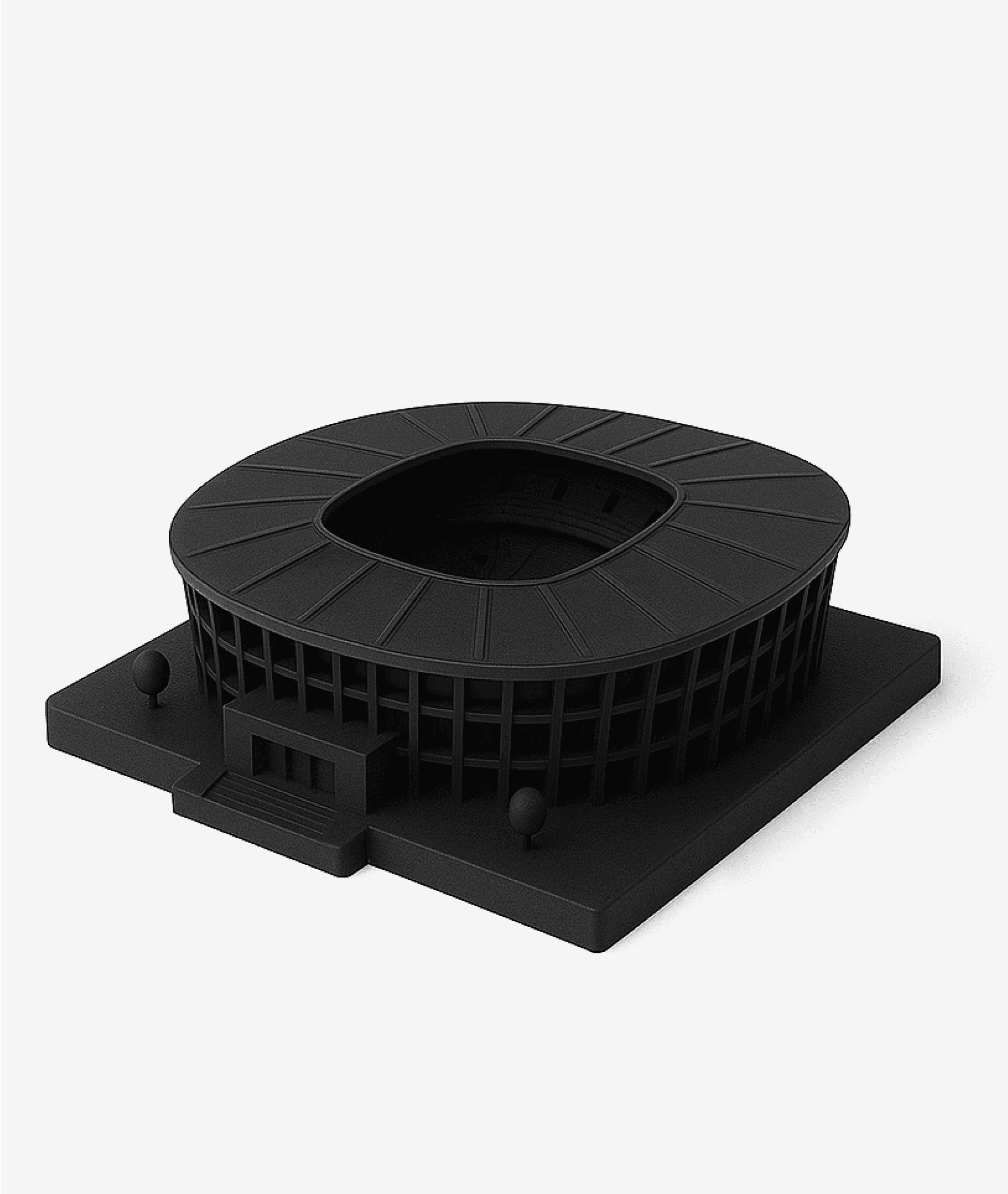
Architecture

Architecture

Applications

Building models, facades, landscapes.

Why it's worth it

Clients see a physical model before ground is broken — approvals happen faster.

03

Railway

Railway

Applications

Fasteners, sensor housings, cable channels.

Why it's worth it

The railcar doesn't sit idle while the part ships from a warehouse. Print on-site — minimal downtime.

04

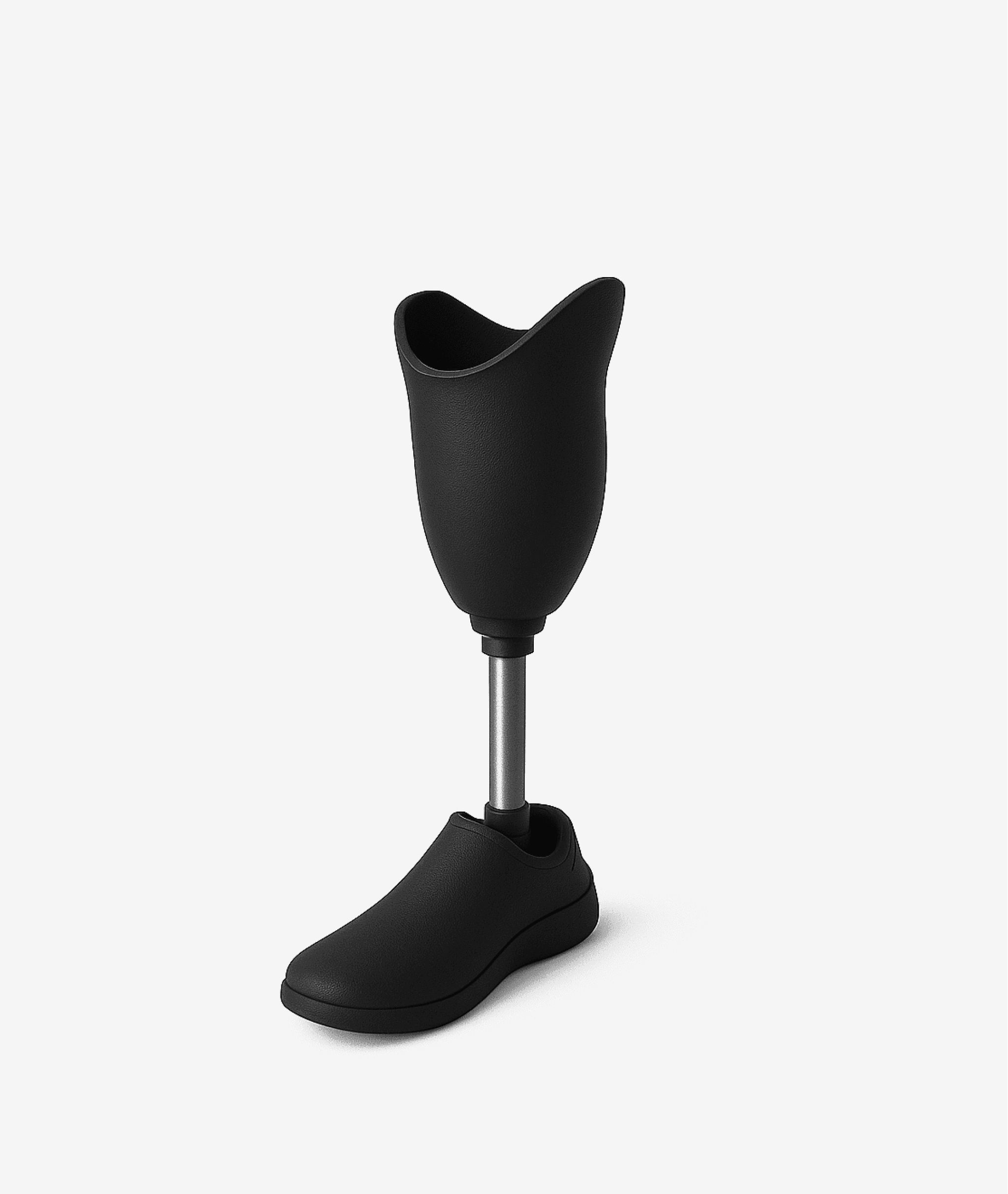
Medical

Medical

Applications

Orthoses, prosthetics, anatomical models.

Why it's worth it

Every piece fits the patient's anatomy exactly. No molds needed, ready in a day.

05

Education & R&D

Education & R&D

Applications

Fixtures, gears, trays.

Why it's worth it

A failed prototype isn't a setback — it's the next iteration. A new one prints in an hour.

06

Aerospace

Aerospace

Applications

Covers, ducts, fasteners.

Why it's worth it

Lighter part, more complex geometry — and still ready overnight instead of a month on the mill.

07

Petrochemicals

Petrochemicals

Applications

Mechanisms, housings, training models.

Why it's worth it

Test the material and shape in days rather than waiting months for production tooling.

08

Instrumentation

Instrumentation

Applications

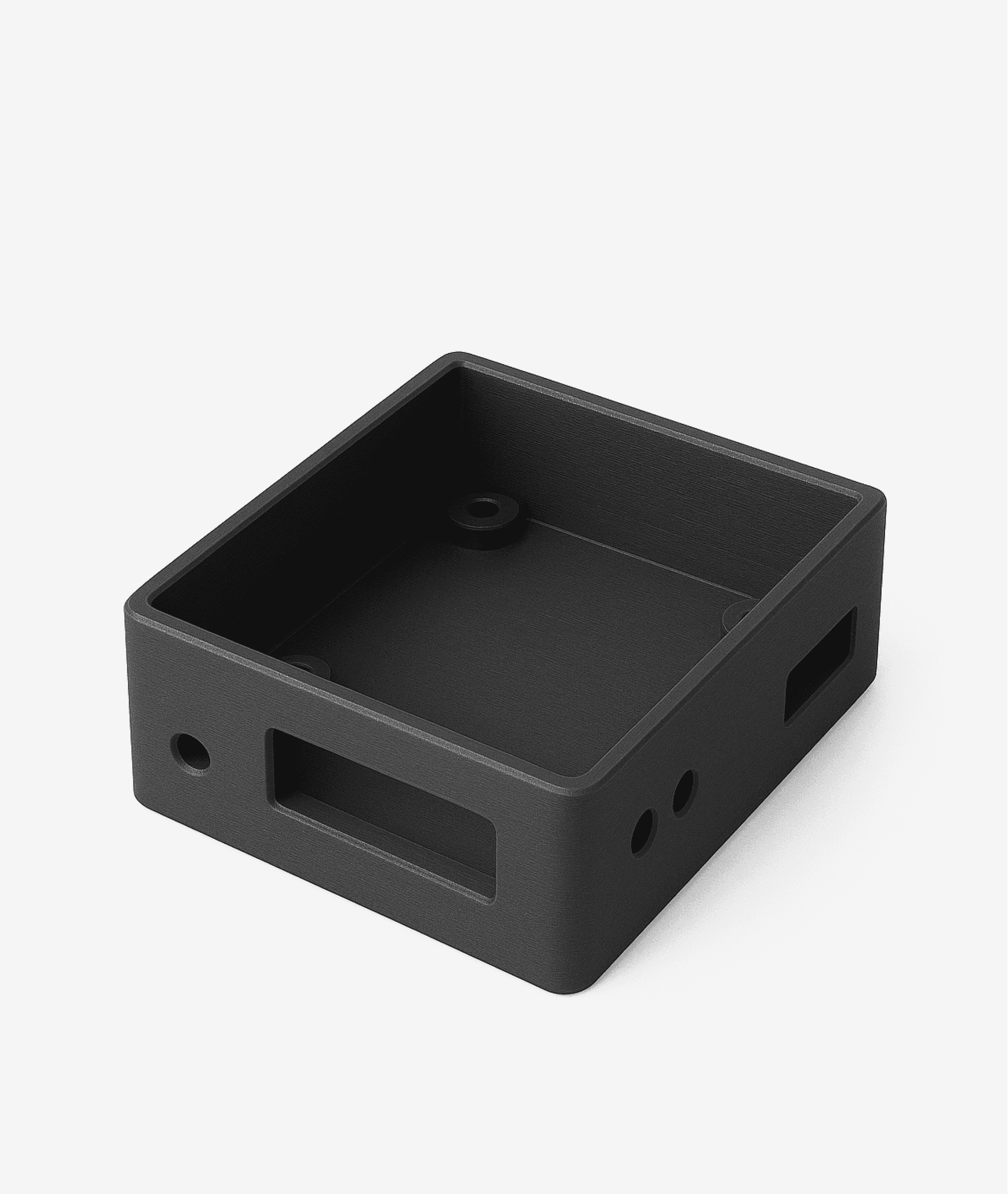
Enclosures, covers, PCB holders.

Why it's worth it

Changed the PCB layout? Reprint the enclosure. No retooling, no missed deadlines.

Don't see your industry?

Tell us what your facility produces — we'll find a solution to cut costs and speed up part production

We'll calculate the savingsfrom 3D printingfor your production

We'll evaluate your parts, compare with your current method, and show where 3D printing is more cost-effective.

  • Cost comparison: current method vs 3D printing
  • Which parts and tooling are worth switching
  • Material and equipment recommendations

Or reach out directly

WhatsApp / Telegram is the fastest.

How did you hear about us?

By clicking "Get an estimate", you agree to the Privacy Policy and Terms of Use.

Response within 24 h on business days. Quote — up to 48 h.